Sunday, August 25, 2013

Buddhism is ...

Buddhism

Buddhism
Buddhism is a religion indigenous to the Indian subcontinent that encompasses a variety of traditions, beliefs and practices largely based on teachings attributed to Siddhartha Gautama, who is commonly known as the Buddha, meaning "the awakened one". The Buddha lived and taught in the eastern part of the Indian subcontinent sometime between the 6th and 4th centuries BCE. He is recognized by Buddhists as an awakened or enlightened teacher who shared his insights to help sentient beings end their suffering through the elimination of ignorance  by way of understanding and the seeing of dependent origination  and the elimination of desire , and thus the attainment of the cessation of all suffering, known as the sublime state of nirvana.
BuddhismTwo major branches of Buddhism are generally recognized: Theravada and Mahayana ("The Great Vehicle"). Theravada has a widespread following in Sri Lanka and Southeast Asia (Cambodia, Laos, Thailand, Myanmar etc.). Mahayana is found throughout East Asia (China, Korea, Japan, Vietnam, Singapore, Taiwan etc.) and includes the traditions of Pure Land, Zen, Nichiren Buddhism, Tibetan Buddhism, Shingon, and Tiantai (Tendai). In some classifications, Vajrayanaâ€"practiced mainly in Tibet and Mongolia, and adjacent parts of China and Russiaâ€"is recognized as a 3rd branch, while others classify it as a part of Mahayana.
BuddhismWhile Buddhism remains most popular within Asia and India, both branches are now found throughout the world. Estimates of Buddhists worldwide vary significantly depending on the way Buddhist adherence is defined. Conservative estimates are between 350 and 750 million. Higher estimates are between 1.2 and 1.6 billion. It is also recognized as one of the fastest growing religions in the world.
This narrative draws on the Nidānakathā biography of the Theravāda sect in Sri Lanka, which is ascribed to Buddhaghoṣa in the 5th century CE. Earlier biographies such as the Buddhacarita, the Lokottaravādin Mahāvastu, and the Mahāyāna / Sarvāstivāda Lalitavistara Sūtra, give different accounts. Scholars are hesitant to make unqualified claims about the historical facts of the Buddha's life. Most accept that he lived, taught and founded a monastic order, but don't consistently accept all of the details contained in his biographies.
According to author Michael Carrithers, while there are good reasons to doubt the traditional account, "the outline of the life must be true: birth, maturity, renunciation, search, awakening and liberation, teaching, death." In writing her biography of the Buddha, Karen Armstrong noted, "It is obviously difficult, therefore, to write a biography of the Buddha that meets modern criteria, because we have very little information that can be considered historically sound... [but] we can be reasonably confident Siddhatta Gotama did indeed exist and that his disciples preserved the memory of his life and teachings as well as they could."
The evidence of the early texts suggests that Siddhārtha Gautama was born in a community that was on the periphery, both geographically and culturally, of the northeastern Indian subcontinent in the 5th century BCE. It was either a small republic, in which case his father was an elected chieftain, or an oligarchy, in which case his father was an oligarch.
According to the Theravada Tripitaka scriptures, Gautama was born in Lumbini in modern-day Nepal, around the year 563 BCE, and raised in Kapilavastu.
According to this narrative, shortly after the birth of young prince Gautama, an astrologer named Asita visited the young prince's fatherâ€"King Åšuddhodanaâ€"and prophesied that Siddhartha would either become a great king or renounce the material world to become a holy man, depending on whether he saw what life was like outside the palace walls.
But at age 29, despite his father's efforts, Gautama ventured beyond the palace several times. In a series of encountersâ€"known in Buddhist literature as the four sightsâ€"he learned of the suffering of ordinary people, encountering an old man, a sick man, a corpse and, finally, an ascetic holy man, apparently content and at peace with the world. These experiences prompted Gautama to abandon royal life and take up a spiritual quest.
Gautama 1st went to study with famous religious teachers of the day, and mastered the meditative attainments they taught. But he found that they didn't provide a permanent end to suffering, so he continued his quest. He next attempted an extreme asceticism, which was a religious pursuit common among the Shramanas, a religious culture distinct from the Vedic one. Gautama underwent prolonged fasting, breath-holding, and exposure to pain. He almost starved himself to death in the process. He realized that he had taken this kind of practice to its limit, and had not put an end to suffering. So in a pivotal moment he accepted milk and rice from a village girl and changed his approach. He devoted himself to anapanasati meditation, through which he discovered what Buddhists call the Middle Way : a path of moderation between the extremes of self-indulgence and self-mortification.
Gautama was now determined to complete his spiritual quest. At the age of 35, he famously sat in meditation under a sacred fig tree â€" known as the Bodhi tree â€" in the town of Bodh Gaya, India, and vowed not to rise before achieving enlightenment. After many days, he finally destroyed the fetters of his mind, thereby liberating himself from the cycle of suffering and rebirth, and arose as a fully enlightened being. Soon thereafter, he attracted a band of followers and instituted a monastic order. Now, as the Buddha, he spent the rest of his life teaching the path of awakening he had discovered, traveling throughout the northeastern part of the Indian subcontinent, and died at the age of 80 (483 BCE) in Kushinagar, India. The south branch of the original fig tree available only in Anuradhapura Sri Lanka is known as Jaya Sri Maha Bodhi.
In Buddhism, karma specifically refers to those actions of body, speech or mind that spring from mental intent, and bring about a consequence or fruit, (phala) or result (vipāka).
In Theravada Buddhism there can be no divine salvation or forgiveness for one's karma, since it is a purely impersonal process that is a part of the makeup of the universe. In Mahayana Buddhism, the texts of certain Mahayana sutras claim that the recitation or merely the hearing of their texts can expunge great swathes of negative karma. Some forms of Buddhism (for example, Vajrayana) regard the recitation of mantras as a means for cutting off of previous negative karma. The Japanese Pure Land teacher Genshin taught that Amida Buddha has the power to destroy the karma that would otherwise bind one in saṃsāra.
Rebirth refers to a process whereby beings go through a succession of lifetimes as one of many possible forms of sentient life, each running from conception to death. Buddhism rejects the concepts of a permanent self or an unchanging, eternal soul, as it is called in Hinduism and Christianity. According to Buddhism there ultimately is no such thing as a self independent from the rest of the universe. Buddhists also refer to themselves as the believers of the anatta doctrineâ€"Nairatmyavadin or Anattavadin. Rebirth in subsequent existences must be understood as the continuation of a dynamic, ever-changing process of "dependent arising" ("pratÄ«tyasamutpāda") determined by the laws of cause and effect (karma) rather than that of one being, transmigrating or incarnating from one existence to the next.
Each rebirth takes place within one of five realms according to Theravadins, or six according to other schools.
The above are further subdivided into 31 planes of existence. Rebirths in some of the higher heavens, known as the Śuddhāvāsa Worlds or Pure Abodes, can be attained only by skilled Buddhist practitioners known as anāgāmis. Rebirths in the arupa-dhatu (formless realms) can be attained by only those who can meditate on the arūpajhānas, the highest object of meditation.
According to East Asian and Tibetan Buddhism, there is an intermediate state between one life and the next. The orthodox Theravada position rejects this; however there are passages in the Samyutta Nikaya of the Pali Canon (the collection of texts on which the Theravada tradition is based), that seem to lend support to the idea that the Buddha taught of an intermediate stage between one life and the next.
The Noble Eightfold Pathâ€"the 4th of the Buddha's Noble Truthsâ€"consists of a set of eight interconnected factors or conditions, that when developed together, lead to the cessation of dukkha. These eight factors are: Right View, Right Intention (or Right Thought), Right Speech, Right Action, Right Livelihood, Right Effort, Right Mindfulness, and Right Concentration.
Buddhist scholars have produced a remarkable quantity of intellectual theories, philosophies and world view concepts. Some schools of Buddhism discourage doctrinal study, and some regard it as essential practice.
The concept of liberation â€"the goal of the Buddhist pathâ€"is closely related to overcoming ignorance (avidyā), a fundamental misunderstanding or mis-perception of the nature of reality. In awakening to the true nature of the self and all phenomena one develops dispassion for the objects of clinging, and is liberated from suffering (dukkha) and the cycle of incessant rebirths (saṃsāra). To this end, the Buddha recommended viewing things as characterized by the three marks of existence.
The Three Marks of
suffering, and not-self.
Existence are impermanence,
-
Impermanence expresses the Buddhist notion that all compounded or conditioned phenomena (all things and experiences) are inconstant, unsteady, and impermanent. Everything we can experience through our senses is composed of parts, and its existence is dependent on external conditions. Everything is in constant flux, and so conditions and the thing itself are constantly changing. Things are constantly coming into being, and ceasing to be. Since nothing lasts, there is no inherent or fixed nature to any object or experience. According to the doctrine of impermanence, life embodies this flux in the aging process, the cycle of rebirth (saṃsāra), and in any experience of loss. The doctrine asserts that because things are impermanent, attachment to them is futile and leads to suffering (dukkha).
Suffering is also a central concept in Buddhism. The word roughly corresponds to a number of terms in English including suffering, pain, unsatisfactoriness, sorrow, affliction, anxiety, dissatisfaction, discomfort, anguish, stress, misery, and frustration. Although the term is often translated as "suffering", its philosophical meaning is more analogous to "disquietude" as in the condition of being disturbed. As such, "suffering" is too narrow a translation with "negative emotional connotations" that can give the impression that the Buddhist view is pessimistic, but Buddhism seeks to be neither pessimistic nor optimistic, but realistic. In English-language Buddhist literature translated from Pāli, "dukkha" is often left untranslated, so as to encompass its full range of meaning.
Not-self is the 3rd mark of existence. Upon careful examination, one finds that no phenomenon is really "I" or "mine"; these concepts are in fact constructed by the mind. In the Nikayas anatta isn't meant as a metaphysical assertion, but as an approach for gaining release from suffering. In fact, the Buddha rejected both of the metaphysical assertions "I have a Self" and "I have no Self" as ontological views that bind one to suffering. When asked if the self was identical with the body, the Buddha refused to answer. By analyzing the constantly changing physical and mental constituents (skandhas) of a person or object, the practitioner comes to the conclusion that neither the respective parts nor the person as a whole comprise a self.

Related Sites for Buddhism

The Balinese People : An Ethnic Group Native to the Indonesian Island of Bali

Balinese people

Balinese people
Balinese peopleThe Balinese are an ethnic group native to the Indonesian island of Bali. Balinese population of 3.0 million (1.5% of Indonesia's population) live mostly on the island of Bali, making up 89% of the island's population. There are also significant populations on the island of Lombok, and in the eastern-most regions of Java (e.g. the Municipality of Banyuwangi). It is the most populous Hindu majority island in the world.
The origins of the Balinese came from three periods: The 1st waves of immigrants came from Java and Kalimantan in the prehistoric times of the proto-Malay stock; the 2nd wave of Balinese came slowly over the years from Java during the Hindu period; the 3rd and final period came from Java, between the 15th and 16th centuries, at the time of the conversion of Islam in Java, aristocrats fled to Bali from the Javanese Majapahit Empire to escape Islamic conversion, reshaping the Balinese culture into a syncretic form of classical Javanese culture with many Balinese elements.
Balinese culture is
dance, drama and sculpture.
use of the gamelan in music.
its form of Wayang kulit or
theatre. It also has several
their religions traditions.
Balinese Hindu/Buddhist
perhaps most known for its
The culture is noted for its
The island is also known for
Shadow play/Shadow Puppet
unique aspects related to
Balinese culture is a mix of
religion and Balinese custom.
Traditionally, a
regarded as immodest. Balinese
their bare chest; however, a
considered immodest. In modern
normally not strictly observed,
Balinese temples are advised to
display of female breasts isn't
women can often be seen with
display of the thigh is
Bali these customs are
but visitors visiting
cover their legs.
In the Balinese naming
or caste is reflected in
system, a person's rank of birth
the name.
A puputan is an act of
frontal assaults in battle, and
during the colonization of
puputan was during the
with Lt. Colonel I Gusti
battle of Puputan Margarana.
after him in commemoration.
mass suicide through
was 1st noted by the Dutch
Bali. The latest act of
Indonesian war of Independence,
Ngurah Rai as the leader in the
The airport in Bali is named
-
The vast majority of the
"holy-water religion". It is a
Traveling Indian priests are said
people to the sacred
Buddhism centuries ago. The
combined it with their own
Balinese from before the 3rd wave
the Bali Aga, are mostly not
retain their own animist
Balinese believe in Agama Tirta,
Shivaite sect of Hinduism.
to have introduced the
literature of Hinduism and
people accepted it and
pre-Hindu mythologies. The
of immigration, known as
followers of Agama Tirta, but
traditions.


Related Sites for Balinese people

Bujangga Manik : precious remnants of Old Sundanese literature

Bujangga Manik


Bujangga Manik
Bujangga Manik is one of the precious remnants of Old Sundanese literature. It is told in octosyllabic lines â€" the metrical form of Old Sundanese narrative poetry â€" in palm-leaf manuscript kept in the Bodleian Library of Oxford University in England, since 1627 or 1629, cf. Noorduyn 1968:469, Ricklefs/Voorhoeve 1977:181). Bujangga Manik altogether consists of 29 palm leaves, each containing approximately some 56 lines of 8 syllables. The final part of the text has been transmitted in a lacunary form. Not only is the end lacking, there are two other lacunae. The 1st break occurs after leaf 26, line 1476.
Bujangga ManikThe hero of the literature is Prabu Jaya Pakuan alias Bujangga Manik, a Sundanese Hindu hermit, who, though a prince at the court of Pakuan Pajajaran (capital city of Sunda kingdom, which was located near present-day Bogor city in western part of Java island), preferred to live a life of a man of religion. As a hermit he made two journeys from Pakuan Pajajaran to central and eastern Java and back, the 2nd one including a visit to Bali. After his return he practiced asceticism on a mountain in western Java, where his bodily existence came to an end; in the final part of the text the journey of his soul to the heavenly regions is described in great detail.
A considerable part of the text is devoted to a detailed description of the 1st and the last stretch of the 1st journey, i.e. from Pakuan Pajajaran to Brebes and from Sunda Kalapa to Pakuan Pajajaran (about 125 lines out of the total of 1641 lines of the incomplete MS), and to the whole of the 2nd journey (about 550 lines). These descriptions are restricted mainly to a mention of the names of places, regions, rivers and mountains situated on or near the route followed. The total number of such names, including those in other parts of the text, comes to some 450, most of them relating to Java island.
The background of Bujangga Manik story had been based on contemporary reality, as is proven by the accuracy of the topographical details of the journeys. These details are therefore of great historical value, especially if the time of writing of this undated story can be at least roughly determined.
It is clear from the text itself that it dates from pre-Muslim times. The script used in the manuscript is the usual Old Sundanese variety of the Indonesian family of Indic syllabaries, which fell into disuse after the penetration of Islam into western part of Java island. The language represents an older stage of Sundanese. It displays a marked influence from Javanese but does not contain one word which is tracable to Arabic, the language of Islam. In the content of the story, too, Islam is completely absent. More specifically the mention of Majapahit, Malaka and Demak allow us to date the writing of the story in the 15th century, probably the later part of this century, or the early 16th century at the latest.
After a brief introduction the protagonist, prince Jaya Pakuan, is introduced in line 14. this princely name isn't mentioned later on; the name Bujangga Manik occurs for the 1st time in 456, and only from 854 on it is regularly used to indicate the protagonist. In lines 15-20 he takes leave from his mother, telling her that he is going east. He is quite succinct in explaining his departure. Of his costume we learn that he wears a haircloth ; perhaps this haircloth is an indication of the religious state which Bujangga Manik assumes for his travel. He refuses to answer questions of the public about the purpose of his journey (38-41).
Then he starts his 1st trip, which he describes in great detail. Only a few details are mentioned here. One is that once he has climbed the Puncak Pass, he takes time, like a modern tourist, to sit down, ‘fan his body’ and enjoy the view, in particular the Great Mountain which he calls ‘the highest point (hulu wano) of the realm of Pakuan’ (59-64).
From the Puncak Pass he travels on; by crossing the Cipamali river he enters the Javanese territory and wanders through various districts of Majapahit and the plain of the region of Demak; via Jatisari he arrives at Pamalang, still a well-known coastal town halfway between Tegal to the west and Pekalongan to the east. Here he is overcome by longing for his mother (89) and he decides to go home; however, this time he prefers to travel by sea and boards a ship from Malacca. The Sultanate of Malacca from the 2nd half of the fifteenth century until its conquest by Portuguese in 1511 was the dominating trading power in the area. This was probably the time the story is set (was written).
The departure of the ship from the harbour is described as a festive ceremony : guns (wedil) are discharged, musical instruments are played, several songs, the titles of which are mentioned, are loudly sung by the crew; a detailed description of the materials used for the building of the ship is given: various kinds of bamboo and rattan, a mast of laka wood, and an Indian rudder are specifically mentioned; Bujangga Manik is duly impressed and full of admiration for the crew which originates from various places.
The trip from Pamalang to Kalapa, the harbour in West Java takes half a month, which suggest that the ship may have stopped at various places in between. The protagonist takes on a new name, Ameng Layaran “the sailing priar”, which also later on is used occasionally. From Kalapa Bujangga Manik comes 1st to the place of customs (Pabeyaan) and then proceeds to the royal court of Pakuan, in the northern part of the present-day town of Bogor (Noorduyn 1982:419). He enters Pakancilan (145), goes to the beautifully adorned pavilion and seats himself there. The 1st person narrative style is once interrupted in line 156 where the protagonist is called tohaan “lord”. He finds his mother engaged in weaving, various aspects of its technique being described in five formulaic lines (160-164). She is surprised and happy to see her son back. She immediately leaves her work and enters the house, passing through several layers of curtains, and ascends to her bedroom. This formulaic passage is repeated in identical form somewhat later (176-196 = 338-358).
The mother prepares the usual welcome for her son, which consists of a tray of all the ingredients for preparing betel quids, combs her hair, makes herself up and puts on expensive clothes. She then descends from her bedroom, leaves the house, seats herself under the palanquin and welcome her son. Again we have a formulaic description, as is apparent from parallel lines in the other texts. The stereotypic character is also clear from the fact that it is a passage deviating from the general narrative perspective which is focused on Bujangga Manik. It is a narrator’s text, which ends with line 229. in 230 we return to the 1st person narrative: “My mother said”. The son accepts the betel quid which his mother offers him.
Then the text switches to a new passage, with a formula which is more commonly used in RR: “let us leave them chewing betel, we shall now talk about ….”. The story switchs to Jompong Larang, the servant of Princes Ajung Larang Sakean Kilat Bancana. Jompong Larang leaves her palace, across the river Cipakancilan and comes to the palace. There she sees a stranger chewing betel in the guest-house. She recognize him as “a priar coming from the east”. Jompong Larang immediately becomes enamoured of his beauty, which is conventionally described in a passage of narrator’s text (267-273).
The servant is in utter confusion and hastens back to the palace, kadatuan ; there she goes to meet the princess (tohaan), who happens to be busy weaving; the formulaic description is partly identical with the earlier description (279-282 = 160-163). The princess, who is dressed in negligee and has an imported Chinese box placed except her (284-290), sees from the corners of her eye the hurried return of Jompong Larang, who ascends the stairs and seats herself.
The lady asks her what her message is; the servant tells that she has seen an exceedingly handsome man, “a perfect match” for Lady Ajung Larang. At the latter’s question she tells that his name is Ameng Layaran and that he is more handsome than Banyak Catra or Silih Wangi, or that “your Lady’s nephew”, whoever that may be. The friar is the ideal lover, and moreover he is well versed in the scriptures and speak Javanese (327). Lady Ajung Larang is immediately overwhelmed with love and desire. She interrupts her weaving and enters her house. There she engages in preparing a gift for the young man, consisting of a variety of special betel quids, using exquisite materials and preparing them with the utmost care. The lady adds a collection of costly perfumes, “all of the perfumes from overseas”, as well as beautiful cloth and a creese.
Jompong Larang is sent to the prince with this expensive gift; her mistress explicitly requires her to explain that if the gift is accepted the lady herself will follow. The servant leaves the palace, loaden with all the presents: “a chest on her head, a betel-tray on her hands and the cloth on her arms”. Her route is described again (414-422), she arrives at the house where she finds Bujangga Manik’s mother sitting on mattress. She asks Jompong Larang what her message is, and the servant duly reports the instruction given by the princess.
Then the mother addressed her son, in a lengthy speech explaining the outstanding quality of the gift. In fact she mentions many more articles that were early described. In particular the specification of the quids in 470-493 is remarkable: they are said to be prepared by forming, folding and rolling them on the thighs and the breast of the lady who prepared them, and by binding them with fringe threads of her frock, so “as to bind a young man, to excite a bachelor’s desire” (470-478). It is clear that by this practice an extra sexual charge is loaded to the betel. A number of quids are identified by a specific name.
The mother urges her son to accept Lady Ajung Larang’s offer; adding that if he agrees “there is no more than just that”; she mentions “symbolic gifts” and ends her strong recommendation by describing the exceptional beauty of the princess and her eagerness to give herself to the young man; has she not said: “I shall give myself, I shall dive like a hawk, leap like a tiger, asking to be accepted as sweetheart”? (530-534; the mother is exaggerating, we have not heard these words from the lady herself).
But Ameng Layaran is shocked by his mother’s enthusiasm which he calls “forbidden words” and resolutely refuses to accept the gift in an equally lengthy declaration (548-650); he reveals the negative meaning of the sesebutan, which predict illness, tears and physical infirmity (563-574). His love is with the instructions which he received from his teacher (575-577). He requests her therefore to go together with Jompong Larang in order to return the gifts to the princess and to comfort her. He prefers to life in celibacy and to keep to the lessons which he received during his recent trip to Central Java, in the district of religious schools on the slopes of the Merbabu (here called gunung Damalung and Pamrihan), where, as one of the friars, he ccommunicated with hermits and ascests, following the teachers indicated as dewaguru, pandita, and purusa (593-606). What his mother requests from him is bad, she shows him the way to death and the cemetery, and ultimately to hell (608-624). He goes on to explain his background as a fatherless child, with a mother who went the wrong way, as a consequence of the fact that his grandmother didn't uphold the taboos (pantang) when his mother was pregnant: she ate banana flowers and beunteur fish, as well as fish about to spawn, and she suffered from “squirrel convulsion” (625-640). “That is why it has come to this”. Therefore he feels compelled for good to take leave from his mother (649-650).
Bujangga Manik takes up his bag containing the great book and the Siksaguru, as well as his rattan walking stick and his whip. He then declares that he is going east again, to the eastern tip of Java where he is going “to look for a place for my grave, to look for a sea to float away, a place for me to die, a place to lay down my body” (663-666). With these dramatic words he leaves the palace and begins his long wandering, never return home again.
He continues his journey eastward, mentioning a large number of place names and pointing out the high mountains in Central Java which he sees in the south, some of them bearing the names which are used until the present day.

Related Sites for Bujangga Manik

Biography Mohammad Hatta, The First Vice President of Indonesia

Mohammad Hatta

Mohammad Hatta
Mohammad Hatta is often remembered as Bung Hatta.
Hatta was born in Bukittinggi on 12 August 1902 into a prominent and strongly Islamic family. His grandfather was a respected ulema in Batuhampar, near Payakumbuh. His father, Haji Mohammad Djamil, died when he was eight months old and he was left with his six sisters and his mother. As in the matrilineal society of Minangkabau tradition, he was then raised in his mother's family. His mother's family was wealthy, and Hatta was able to study Dutch as well as finishing Qur'an after school.
Mohammad HattaHe went to the Dutch language elementary school in Padang from 1913 to 1916 after he had finished Sekolah Melayu ('Malay School') in Bukittinggi. When he was thirteen, he passed an exam that entitled him to enroll in the Dutch secondary school (HBS or Hogere burgerschool) in Batavia (now Jakarta). However his mother asked him to stay in Padang because he was still too young to go to the capital alone. Hatta then entered junior secondary school or MULO (Meer Uitgebreid Lager Onderwijs).
During his spare time, he worked part-time in a post office. Normally, MULO students were not allowed to work, but he was able to work there because of the HBS exam qualification. Hatta was interested in football; he joined his school's football team and was made its chairman. He broadened his sphere of contacts by using his position.
Mohammad HattaHatta used to visit the office of the Sarikat Usaha, led by Taher Marah Soetan. In the office, he read Dutch newspapers, particularly about political debates in the Volksraad (parliament) of the Dutch East Indies. It was at the age of sixteen that Hatta began to be interested in politics and national movements. He was chosen the treasurer of the branch of the Jong Sumatranen Bond (or youth association of Sumatra), which was 1st established in Padang in 1918.
In 1919, Hatta finally went to the HBS in Batavia. He completed his study with distinction in 1921, and was allowed to continue to study at the Rotterdam School of Commerce in Rotterdam, the Netherlands. He took economics as his major and earned a doctorandus degree in 1932. The degree entitled him to follow a doctorate program. He then continued to pursue the doctorate degree, and completed all requirements to be awarded it, but he never finished his thesis. Politics had taken over Hatta's life.
In the Netherlands, Hatta joined the Indische Vereniging. In 1922, the organization changed its name to Indonesische Vereniging and later to the Perhimpunan Indonesia (the same meaning but in Indonesian). Hatta was the treasurer (1922â€"1925), and then the chairman (1926â€"1930). On his inauguration, Hatta delivered a speech with the title of "The Structure of the Global Economy and the Conflict of Power", in which he supported the idea of Indonesian non-cooperation with the Dutch colonial government in order to gain its independence. Perhimpunan Indonesia then changed from being a from student organization into a political organization and had an unequivocal demand for Indonesia's independence. It expressed its voice through the a magazine called Indonesia Merdeka (or Free Indonesia) of which Hatta was the editor.
To gain more support from other nations, Hatta attended congresses all over Europe, always as the chairman of the Indonesian delegation. In 1926, Hatta and Perhimpunan Indonesia joined the International Democratic Congress for Peace in Bierville, France. In February 1927, Hatta went to Brussels to attend a congress held by the League Against Imperialism and Colonial Oppression. He met many other prominent nationalists there, including Jawaharlal Nehru from India, Hafiz Ramadan Bey from Egypt and Lamine Senghor from Africa. Later in the year, Hatta attended another congress held by the International Women's League for Peace and Freedom in Switzerland. On that occasion, Hatta delivered a speech with the title of "Indonesia and the Matter of Independence".
By the middle of 1927, Perhimpunan Indonesia's activities had alarmed the Dutch authorities. In June 1927, Dutch authorities raided the residence of the organization's leaders, searching through their rooms and putting Hatta and other four other Indonesian activists behind bars. After spending nearly six months in prison, they were taken to trial in the Hague. They were permitted to explain themselves during the hearing, and Hatta took to the opportunity to explain Indonesia's nationalist cause. He made a speech to the court explaining that Indonesia's interests were in conflict with those of the Dutch, and that was why they could not cooperate. Hatta advocated cooperation between Indonesia and the Netherlands, but only if Indonesia was independent and treated as an equal partner, not unequally because of its status as a colony. The speech became famous and it is known as the Indonesia Vrij or Free Indonesia speech.
In 1929, Hatta and other Perhimpunan Indonesia activists were released. They then joined forces with the Indonesian-based nationalist, Sukarno and his Indonesian National Party. Together, Hatta and Sukarno set up a cadre school to train people with nationalistic interests. In the school, potential cadres were trained in economics, the history of the nationalist movement and in the government administration. In July 1932, Hatta made his way home to Indonesia.
Hatta returned home to an Indonesia whose nationalist momentum had been slowed down by the arrest and imprisonment of Sukarno. By the time Hatta had returned, most of the members of Sukarno's PNI had joined the Indonesian Party and more radical PNI members, together with the Dutch-educated Sutan Syahrir had banded together to form the New PNI. Although the initials were the same, the PNI in this case stood for the Indonesian National Education, indicating that it would focus on cadre training. In August 1932, after returning from the Netherlands, Hatta became the Chairman of the New PNI.
In December 1932, Sukarno was finally released from prison and the attention now turned to which party Sukarno would choose. Sukarno, who had wanted one united front to gain Indonesia's independence was uncertain, thinking that in choosing one over the other, he would encourage division. In this, he was criticized by Hatta, who was more pragmatic about differences, in this case the conflict between Partindo's radical and mass party approach versus the New PNI's moderate and cadre party approach. Sukarno insisted on negotiations to unify Partindo and New PNI but after failing, chose to join Partindo.
Between 1932 and 1933, Hatta wrote articles on politics and economics for the New PNI's newspaper Daulat Rakyat. These articles were aimed at training new cadres for Indonesia's leadership.
Hatta seemed to be extremely critical of Sukarno at this point in time. In August 1933, with Sukarno once again arrested and facing trial, he wrote an article called "Sukarno Is Arrested". This was followed by articles entitled "The Tragedy of Sukarno" and "The Stance of a Leader" (December 1933).
The Dutch Colonial Government gave Sukarno a harsh punishment, exiling him to Ende on the island of Flores in December 1933. With Sukarno in exile, the Dutch Colonial Government now turned their eyes to the New PNI and its leadership. In February 1934, they made their move and arrested its leaders from its Jakarta branch and its Bandung branch. For a year they were jailed at prisons in Cipinang and Glodok, with Hatta spending his time in Glodok. During his time in prison, Hatta wrote a book entitled "The Economical Crisis and Capitalism".
In January 1935, it was decided that Hatta and his fellow New PNI leaders would be exiled to Boven Digoel in Papua. When Hatta arrived there, he was told by the local authorities that he had two options. The 1st option was to work for the Dutch Colonial Government as a civil servant for 40 cents a day with the hope of returning from exile, and the 2nd option was being an exile, receiving food but having no hope of returning from exile. Hatta commented if he had decided to take a job as a civil servant in Jakarta, he would have earned a lot of money and knowing that, there was no need to go to Boven Digoel to be paid cheaply. In saying this, Hatta chose the 2nd option.
During his exile, Hatta continued to write articles, this time for the Newspaper Pemandangan. He earned enough money from that to make ends meet at Boven Digoel and to support his colleagues who had financial troubles. Hatta also used his books (which filled 16 chests when they were packed to leave Jakarta) to give his colleagues lessons on economics, history, and philosophy. Later on these lessons would be made into books entitled "An Introduction on the Way to Knowledge" and "The Nature of Greek Thought" (four volumes).
In January 1936, Hatta and Syahrir were transferred to Bandaneira in Maluku. There they joined more nationalists such as Iwa Kusumasumantri and Dr. Cipto Mangunkusumo. Hatta and Syahrir were given more freedom and were able to interact with the locals. Hatta and Syahrir also gave lessons to the local children, teaching them about politics and history. Hatta adopted a local boy, Des Alwi, as his son while living in Bandaneira. Alwi would become a prominent Indonesian historian and diplomat.
In February 1942, Hatta
transferred to Sukabumi in West
and Syahrir were
Java.
By 1942, World War II was well under way and the Empire of Japan was fulfilling its imperial ambitions in East Asia and South East Asia. In March 1942, they began landing in Indonesia. Like their counterpart in Europe, the Dutch Colonial Government crumbled in the face of the invaders and by 9 March 1942, surrendered. On 22 March 1942, Hatta and Syahrir were again transferred to Jakarta.
In Jakarta, Hatta met with Major General Harada, the Interim Head of Government. Harada asked Hatta to become an advisor for the occupational Government. Hatta accepted the job and then asked Harada if Japan was here to colonize Indonesia. Harada assured Hatta that Japan would not do. In Hatta's eyes, an acknowledgement of an Indonesian Independence by Japan was extremely important. If Japan, with its ultra-nationalistic ideology was able to recognize Indonesia's independence, it would put more pressure on the Allies as representatives of democracy to do the same thing.
In July 1942, Hatta was reunited with Sukarno who after Flores had been transferred to Sumatra before the Japanese arrived, and had also been asked for his services. Although they had left off on a bad note, Sukarno wanted to speak with Hatta before speaking with anyone else. In a secret meeting at Hatta's Jakarta home Sukarno, Hatta and Sjahrir agreed that Sjahrir would go underground to organise the revolutionary resistance while the other 2 would commence their cooperation with the Japanese occupier. Hatta and Sukarno now had the common goal of working with the Japanese and then trying to achieve independence from them. Together with Ki Hadjar Dewantoro and Muhammadiyah Chairman, Kiai Haji Mas Mansur, Hatta and Sukarno formed a quattuorvirate of leaders tasked by the Japanese occupational Government as their intermediary with the Indonesian people.
Hatta together with the other members of the quattuorvirate worked with much fervor under the Japanese Government. They echoed Japanese propaganda and presented the Japanese Empire as the protector, leader, and the light of Asia. At the same time however, Hatta continued to promote Indonesia's desire for independence. In a speech in December 1942, Hatta said that Indonesia had been freed from the Dutch Colonial Government, but if they were freed only to be colonized by another power, he would rather see Indonesia drown to the bottom of the ocean.
On 9 March 1943, the Japanese Occupational Government approved the formation of the Centre of People's Power with Hatta and the other quattuorvirate as the co-Chairmen of the association. Sukarno thought that the would be a way from which they could gain support for independence, instead the Japanese used this to their own cause and to start their romusha (forced labour) regime in Indonesia.

Related Sites for Mohammad Hatta

Liberal democracy period in Indonesia Began in 1950

Liberal democracy period in Indonesia

Liberal democracy period in Indonesia


An era of Liberal Democracy in Indonesia began in 1950 following the securing of Indonesian independence in the Indonesian National Revolution, and ended with the imposition of martial law and President Sukarno's introduction of Guided Democracy in 1957. It saw a number of important events, including the 1955 Asianâ€"African Conference, Indonesia's 1st general and Constitutional Assembly elections, and was an extended period of political instability, with no cabinet lasting as long as two years.
With the unifying struggle to secure Indonesia's independence now over, divisions in Indonesian society began to appear. Regional differences in customs, morals, tradition, religion, the impact of Christianity and Marxism, and fears of Javanese political domination, all contributed to disunity. The new country was typified by poverty, low educational levels, and authoritarian traditions. Various separatist movements opposed the Republic of Indonesia: the militant Darul Islam proclaimed an "Islamic State of Indonesia" and waged a guerrilla struggle against the Republic in West Java from 1948 to 1962; in Maluku, Ambonese formerly of the Royal Dutch East Indies Army proclaimed an independent Republic of South Maluku; and rebellions in Sumatra and Sulawesi between 1955 and 1961.
The economy was in a disastrous state following almost 10 years of Japanese occupation and war against the Dutch. In the hands of a young and inexperienced government, the economy was unable to boost production of food and other necessities to keep pace with an increasing population. Most of the population was illiterate, unskilled, and suffered from a dearth of management skills. Inflation was rampant, smuggling cost the central government much needed foreign exchange, and much of the plantations had been destroyed during the occupation and war.
The Provisional Constitution of 1950 differed markedly from the 1945 Constitution in many ways; it mandated a parliamentary system of government, and stipulated at length constitutional guarantees for human rights, drawing heavily on the 1948 United Nations Universal Declaration of Human Rights. It was abrogated on July 9, 1959 when President Sukarno issued a decree dissolving the Constitutional Assembly and restoring the 1945 Constitution of Indonesia.
A proliferation of political parties and the deals brokered between them for shares of cabinets seats resulted in rapid turnover coalition governments including 17 cabinets between 1945 and 1958. The long-postponed parliamentary elections were finally held in 1955; the Indonesian National Party â€"considered Sukarno's partyâ€"topped the poll, and the Communist Party of Indonesia (PKI) received strong support, but no party garnered more than a quarter of the votes, resulting in short-lived coalitions.
By 1956, Sukarno was openly criticising parliamentary democracy, stating that it was 'based upon inherent conflict' that ran counter to the Indonesian concept of harmony as the natural state of human relationships. Instead, he sought a system based on the traditional village system of discussion and consensus, which occurred under the guidance of village elders. He proposed a threefold blend of nasionalisme, agama ('religion'), and komunisme ('communism') into a co-operative 'Nas-A-Kom' government. This was intended to appease the three main factions in Indonesian politics - the army, Islamic groups, and the communists. With the support of the military, he proclaimed in February 1957, 'Guided Democracy', and proposed a cabinet of representing all the political parties of importance (including the PKI). Western-style parliamentary democracy was thus finished in Indonesia until the 1999 elections of the Reformasi era.

Related Sites for Liberal democracy period in Indonesia

Pagaruyung Kingdom was Seat of The Minangkabau Kings of Western Sumatra

Pagaruyung Kingdom

Pagaruyung Kingdom
Pagaruyung was the seat of the Minangkabau kings of Western Sumatra, though little is known about it. Modern Pagaruyung is a village in Tanjung Emas subdistrict, Tanah Datar regency, located near the town of Batusangkar, Indonesia.
There is a major gap in the historical picture in the Minangkabau highlands between the last date of Adityawarman’s inscription in 1375 and Tomx Pires Suma Oriental, written sometime between 1513 and 1515.
Pagaruyung KingdomBy the 16th century, the time of the next report after the reign of Adityawarman, royal power had been split into three recognized reigning kings. They were the King of the World, the King of Adat (Raja Adat), and the King of Religion (Raja Ibadat). Collectively they were called the Kings of the Three Seats (Rajo Tigo Selo).
The 1st European to enter the region was Thomas Dias, a Portuguese employed by the Dutch governor of Malacca. He traveled from the east coast to reach the region in 1684 and reported, probably from hearsay, that there was a palace at Pagaruyung and that visitors had to go through three gates to enter it. The primary local occupations at the time were gold panning and agriculture, he reported.
A civil war started in 1803 with the Padri fundamentalist Islamic group in conflict with the traditional syncretic groups, elite families and Pagarruyung royals. During the conflict most of the Minangkabau royal family were killed in 1815, on the orders of Tuanku Lintau.
The British controlled the west coast of Sumatra between 1795 and 1819. Stamford Raffles visited Pagarruyung in 1818, reaching it from the west coast, and by then it had been burned to the ground three times. It was rebuilt after the 1st two fires, but abandoned after the 3rd and Raffles found little more than waringin trees.
The Dutch returned to Padang in May 1819. As a result of a treaty with a number of penghulu and representatives of the murdered Minangkabau royal family, Dutch forces made their 1st attack on a Padri village in April 1821.
Pagaruyung KingdomThe prestige of Pagaruyung remained high among the Minangkabau communities in the rantau, and when the members of the court were scattered following a failed rebellion against the Dutch in 1833, one of the princes was invited to become ruler in Kuantan.
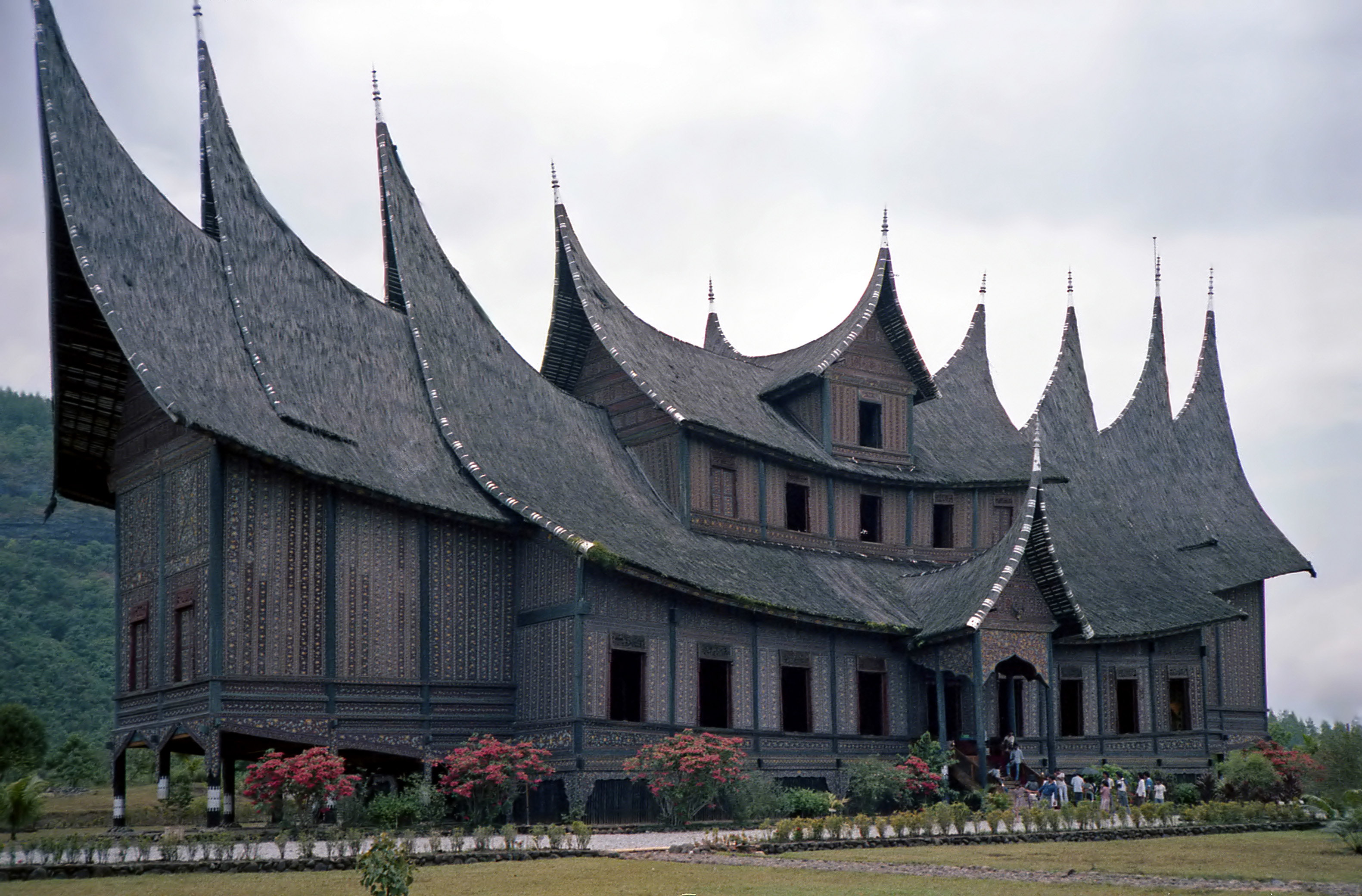
A building was built in 1976 to represent the original Pagaruyung palace, and open to the public as a museum and tourist attraction. It was built in the traditional Minangkabau Rumah Gadang architectural style, but had a number of atypical elements including three stories. The palace was destroyed by fire on the evening of February 27, 2007 after the roof was struck by lightning.

Related Sites for Pagaruyung Kingdom

Saturday, August 24, 2013

History of Medang (Mataram) Kingdom in Central Java

Medang Kingdom

The Medang or Mataram Kingdom was a Hindu–Buddhist kingdom that flourished between the 8th and 10th centuries CE. It was based in Central Java, and later in East Java. Established by King Sanjaya, the founder of the Sanjaya dynasty, the kingdom was ruled by the Sailendra and Sanjaya families. By 850, the kingdom had become the dominant power in Java and was a serious rival to the hegemonic Srivijaya Empire.
Medang KingdomMedang KingdomThe earliest account of the Medang Kingdom is in the Canggal inscription, dated 732, discovered in Canggal village, southwest of the town of Magelang. This inscription, written in Sanskrit using the Pallava script, tells of the erection of a lingga on the hill in the Kunjarakunja area, located on a noble island called Yawadwipa (Java) which was blessed with abundance of rice and gold. This inscription tells that Yawadwipa was ruled by King Sanna, whose long reign was marked by wisdom and virtue. After Sanna died, the kingdom fell into disunity. Sanjaya, the son of Sannaha (Sanna's sister) ascended to the throne. He conquered the areas around his kingdom, and his wise reign blessed his land with peace and prosperity for all of his subjects.
Sanna and Sanjaya are
Parahyangan, a book from a later
the history of Pasundan .
Sanna was defeated by
retreated to Mount Merapi. Later,
kingdom and ruled West Java,
Bali. He also battled the
their king, Sang Srivijaya).
also described in the Carita
period which mainly describes
This book mentions that
Purbasora, King of Galuh, and
Sanjaya reclaimed Sanna's
Central Java, East Java, and
Malayu and Keling (against
-
Bosch in his book "Srivijaya, de Sailendravamsa en de Sanjayavamsa" suggested that king Sanjaya was the progenitor of the Sanjaya Dynasty, and there was two dynasties that ruled Central Java; the Buddhist Sailendra and the Shivaist Sanjaya dynasty. The inscription also states that Sanjaya was an ardent follower of Shaivism. From its founding in the early 8th century until 928, the kingdom was ruled by the Sanjaya dynasty. The 1st king was Sanjaya, who ruled in the Mataram region in the vicinity of modern Yogyakarta and Prambanan, and left the written records on the Canggal inscription. However, around the mid 8th century, the Sailendra dynasty emerged in Central Java and challenged Sanjaya domination in the region.
According to the
CE and written in the
Kalasan temple was erected by
Sailendravamxatilaka , who persuaded
to construct a holy
(boddhisattvadevi) Tara and build a vihara
the Sailendra realm.
village to a sangha (Buddhist
Kalasan inscription, dated 778
Pranagari script in Sanskrit, the
the will of Guru Sang Raja
Panangkaran (Sanjaya's successor)
building for the goddess
(monastery) for Buddhist monks from
Panangkaran also awarded Kalaxa
monastic community).
The prevailing historical interpretation holds that the Sailendra dynasty co-existed next to the Sanjaya dynasty in Central Java, and much of the period was characterized by peaceful cooperation. The Sailendra, with their strong connections to Srivijaya, managed to gain control of Central Java and become overlords of the Rakai , including the Sanjayas, thus making the Sanjaya kings of Mataram their vassals. Little is known about the kingdom due to the dominance of the Sailendra, who during this period constructed Borobudur, a Buddhist monument. Samaratungga, the monarch of the Sailendra, tried to secure the Sailendra position in Java, cementing an alliance with the Sanjayas by arranging the marriage of his daughter Pramodhawardhani with Pikatan.
Around the middle of the
between the Sanjaya and the
the Sanjaya ruler,
the offspring of the
and the princess Tara. This
in Java; Balaputra
capital in Sumatra, where he
The Balaputra defeat and
recorded in Shivagrha
Rakai Kayuwangi, Pikatan's
9th century, relations
Sailendra deteriorated. In 852,
Pikatan, defeated Balaputra,
Sailendra monarch Samaratunga
ended the Sailendra presence
retreated to the Srivijayan
became the paramount ruler.
the victory of Pikatan was
inscription dated 856, edicted by
successor.
However, this dual
proposed by Bosch and De Casparis
Indonesian historians in later
proposed by Poerbatjaraka,
kingdom and one dynasty, the
capital in the Mataram area , and
the Sailendra.
Sailendra—Sanjaya dynasties theory
was opposed by some
period. An alternate theory,
suggests there was only one
kingdom called Medang, with the
the ruling dynasty being
-
This theory is supported with Boechari interpretation on Sojomerto inscription and Poerbatjaraka study on Carita Parahyangan manuscript, Poerbatjaraka holds that Sanjaya and all of his offspring belongs to the Sailendra family, which initially was Shivaist Hindu. However, according to Raja Sankhara inscription ; Sanjaya's son, Panangkaran, converted to Mahāyāna Buddhism. And because of that conversion, the later series of Sailendra kings who ruled Medang become Mahāyāna Buddhists also and gave Buddhism royal patronage in Java until the end of Samaratungga's reign. The Shivaist Hindus regained royal patronage with the reign of Pikatan, which lasted until the end of the Medang Kingdom. During the reign of Kings Pikatan and Balitung, the royal Hindu Trimurti temple of Prambanan was built and expanded in the vicinity of Yogyakarta.
Most of the time, the
was located in Mataram,
near modern Yogyakarta and
reign of Rakai Pikatan, the
Later, in the reign of
this time to Poh Pitu. Unlike
unable to pinpoint the exact
although most historians agree
Kedu Plain, somewhere
Temanggung regencies. Later,
court was moved back to the
court of the Medang Kingdom
somewhere on the Prambanan Plain
Prambanan. However, during the
court was moved to Mamrati.
Balitung, the court moved again,
Mataram, historians have been
locations of Mamrati and Poh Pitu,
that both were located in the
around the modern Magelang or
during the reign of Wawa, the
Mataram area.
The complex stratified
refined aesthetic taste in art
through the various scenes in
various temples dated from the
ancient Javan society, with its
and culture, is evidenced
narrative bas-reliefs carved on
Medang era.
The common people of Medang mostly made a living in agriculture, especially as rice farmers, however, some may have pursued other careers, such as hunter, trader, artisan, weaponsmith, sailor, soldier, dancer, musician, food or drink vendor, etc. Rich portrayals of daily life in 9th century Java can be seen in many temple bas-reliefs. Rice cultivation had become the base for the kingdom's economy where the villages throughout the realm relied on their annual rice yield to pay taxes to the court. Exploiting the fertile volcanic soil of Central Java and the intensive wet rice cultivation enabled the population to grow significantly, which contributed to the availability of labor and workforce for the state's public projects. Certain villages and lands were given the status as sima (tax free) lands awarded through royal edict written in inscriptions. The rice yields from sima lands usually were allocated for the maintenance of certain religious buildings.
The bas-reliefs from temples of this period, especially from Borobudur and Prambanan describe occupations and careers other than agricultural pursuit; such as soldiers, government officials, court servants, massage therapists, travelling musicians and dancing troupe, food and drink sellers, logistics courier, sailors, merchants, even thugs and robbers are depicted in everyday life of 9th century Java. These occupations requires economy system that employs currency. The Wonoboyo hoard, golden artifacts discovered in 1990, revealed gold coins in shape similar to corn seeds, which suggests that 9th century Javan economy is partly monetized. On the surface of the gold coins engraved with a script "ta", a short form of "tail" or "tahil" a unit of currency in ancient Java.
The King was regarded as the paramount ruler or chakravartin, where the highest power and authority lies. The king, the royal family and the kingdom's officials had the authority to launch public projects, such as irrigation works or temple construction. The kingdom left behind several temples and monuments. The most notable ones are Prambanan, Sewu, and the Plaosan temple compound. The palace where the King resided was mentioned as kadatwan or keraton, the court was the center of kingdom's administration. Throughout its history, the center of Medang kingdom was mostly situated in and around Prambanan Plain, named as Mataram, however during the reign of other kings, the capital may shifted to other places. Several other courts and capital cities were mentioned, such as Mamrati and Poh Pitu, location unknown but probably somewhere in Kedu Plain. In later Eastern Java period, other centers were mentioned; such as Tamwlang and Watugaluh (near Jombang), also Wwatan (near Madiun).
The Wonoboyo hoard
to the wealth, art, and
achievement of the Medang Kingdom.
intricate artwork and technical
goldsmith. The hoard was estimated
King Balitung. The treasure
belonging to a noble or a member of
golden artifacts also attest
culture as well as the aesthetic
The artifacts show the
mastery of the ancient Javanese
to date from the reign of
has been identified as
the royal family.
Since the beginning of
Mataram kings seemed to favour
construction of Gunung Wukir Hindu
inscription by king Sanjaya.
Panangkaran and the rise of
Buddhism began to blossomed and
Kalasan, Sari, Mendut, Pawon and
and Sewu temples testify
in Central Java. The court
from the reign of
During the reign of Pikatan,
regain court's favour,
grand Shivagrha .
its formation, the Medang
Shivaist Hinduism, such as the
temple as mentioned in Canggal
However during the reign of
Sailendras influence, Mahayana
gain court favour. The
the magnificent Borobudur
the Buddhist renaissance
patronage on Buddhism spanned
Panangkaran to Samaratungga.
Shivaist Hinduism began to
signified by the construction of
-
Other Hindu temples dated from Medang Mataram Kingdom era are: Sambisari, Gebang, Barong, Ijo, and Morangan. Although the Shivaist regain the favour, buddhist remain under royal patronage. The Sewu temple dedicated for Manjusri according to Kelurak inscription was probably initially built by Panangkaran, but later expanded and completed during Rakai Pikatan's rule, whom married to a Buddhist princess Pramodhawardhani, daughter of Samaratungga. Most of their subjects retained their old religion; Shivaist and Buddhist seems to co-exist in harmony. The buddhist temple of Plaosan, Banyunibo and Sajiwan were built during the reign of King Pikatan and Queen Pramodhawardhani, probably in the spirit of religious reconciliation after the battle of succession between Pikatan-Pramodhawardhani against Balaputra.
From the 9th to mid 10th centuries, the Medang Kingdom witnessed the blossoming of art, culture and literature, mainly through the translation of Hindu-Buddhist sacred texts and the transmission and adaptation of Hindu-Buddhist ideas. The bas-relief narration of the Hindu epic Ramayana was carved on the wall of Prambanan Temple. During this period, the Kakawin Ramayana, an old Javanese rendering was written. This Kakawin Ramayana, also called the Yogesvara Ramayana, is attributed to the scribe Yogesvara circa the 9th century CE, who was employed in the court of the Medang in Central Java. It has 2774 stanzas in the manipravala style, a mixture of Sanskrit and archaic Javanese prose. The most influential version of the Ramayana is the Ravanavadham of Bhatti, popularly known as Bhattikavya. The Javanese Ramayana differs markedly from the original Hindu.
The name of the Medang
Laguna Copperplate
discovered in Manila,
inscriptions, written in the Kawi
containing numerous loanwords
non-Malay vocabulary elements
between Old Javanese and Old
people or officials of the
inter-insular trade and foreign
the Philippines, and that
kingdoms in Indonesia and the
Kingdom was written in the
Inscription, dated 822 saka ,
Philippines. The discovery of the
script in a variety of Old Malay
from Sanskrit and a few
whose origin is ambiguous
Tagalog, suggests that the
Medang Kingdom had embarked on
relations in regions as far away as
connections between ancient
Philippines existed.
Around the year 929, the centre of the kingdom was shifted from Central Java to East Java by Mpu Sindok, who established the Isyana Dynasty. The exact cause of the move is still uncertain; however, a severe eruption of Mount Merapi volcano or a power struggle probably caused the move. Historians suggest that, some time during the reign of King Wawa of Mataram , Merapi volcano erupted and devastated the kingdom's capital in Mataram. The historic massive volcano eruption is popularly known as Pralaya Mataram (the death of Mataram). The evidence for this eruption can be seen in several temples that were virtually buried under Merapi's lahar and volcanic debris, such as the Sambisari, Morangan, Kedulan, and Pustakasala temples.
Another theory
capital city eastward was to
or was motivated by
river valley was considered
for the control of maritime
parts of archipelago, being
Maluku spice trade.
suggests that the shift of
avoid a Srivijaya invasion,
economic reasons. The Brantas
to be a strategic location
trade routes to the eastern
especially vital for control of the
-
Sindok moved the
moved it again to Watugaluh.
with the Tambelang and
Jombang, East Java. A later king,
to Wwatan, identified as
Madiun. Dharmawangsa also
Mahabharata into Old Javanese in
capital to Tamwlang and later
Historian identify those names
Megaluh area near modern
Dharmawangsa, moved the capital again
the Wotan area near modern
ordered the translation of the
996.

Related Sites for Medang Kingdom