Friday, September 6, 2013

History of Airlangga

Airlangga


AirlanggaAirlangga was born from dynastic marriage between Isyana of Java and Warmadewa of Bali. His mother, queen Mahendradatta, was a princess of the Isyana Dynasty, the sister of king Dharmawangsa of Medang, while his father, king Udayana Warmadewa of Bali, was a king of the Balinese Warmadewa Dynasty. Bali in 11th century probably was an ally or vassal of Java, the marriage of Airlangga's parents was probably meant as political means to seal Bali as part of Medang's realm. Airlangga has two younger brothers, Marakata and Anak Wungxu (ascend to Balinese throne after the death of Marakata). Later, in various inscriptions edicted by Airlangga, he claimed to be the descendant of Mpu Sindok of Isyana dynasty.
However there is a speculation suggesting that Airlangga wasn't the biological son of king Udayana, Mahendradatta was probably conceived Airlangga from her previous union to an unknown man, that after her separation Mahendradatta was bethroted to Balinese king, thus she took the baby Airlangga to Bali. Historical sources seems to be silenced on Mahendradatta's suspected earlier marriage, that it might be a scandal or not even took place. This suspicion was because although Airlangga was the eldest son of Mahendradatta, curiously he isn't chosen as the crown prince of Bali, his younger brother Marakata and later Anak Wungxu rose to Balinese throne instead. Moreover Mahendradatta sent Airlangga back to Java during his teenage. Mahendradatta was known to be promoting the cult of Durga in Bali, and curiously later associated with Balinese legend of evil witch Rangda, which translates to "widow".
Airlangga was born and grew up in Bali, groomed by his mother, queen Mahendradatta, to be a proper future ruler. In his teenage years his mother sent him back to her parents home in Java to be educated further in Watugaluh court, Medang, East Java, under the patronage of his uncle, king Dharmawangsa. Airlangga was bethroted to his cousin, one of Dharmawangsa's daughter, thus arranged marriage was in place. At that time, Medang had become a powerful kingdom, allied or probably subjugated Bali, and had established a colony in West Kalimantan. Dharmawangsa aspired to ascend Medang as regional power by challenging Srivijaya Empire domination. In 990 he launched naval invasion against Srivijaya and unsuccessfully tried to capture Palembang. Srivijaya resiliently succeed on repelling Javanese Medang invaders.
The Calcutta Stone
calamity which befell the East
dynasty in the early years of the
rebellion incited by a vassal king
the destruction of the
reigning king, Dharmawangsa,
Makutawangsawardhana, was murdered along with
of his subjects. Only the
about 16 at the time, managed
According to tradition the
death) of Medang, was took
wedding ceremony in
inscription , describes a terrible
Javanese kingdom of Isyana
11th century. In 1006, a
Wurawari from Lwaram resulted in
capital of Watugaluh. The
successor to Sri
his entire family and many
young Airlangga, who was aged
to escape unharmed.
calamity, dubbed as Pralaya (the
place during Airlangga's
Dharmawangsa palace.
Today historians strongly suggested that the invasion was actually a Srivijayan retaliation against Medang for the attacks upon the empire. After the failed Dharmawangsa's naval campaign against Palembang back in 990, Sri Culamanivarmadeva the Maharaja of Srivijaya saw Javanese Medang as a dangerous threat, thus arranged a stratagem to destroy Medang by inciting a revolt. King Wurawari of Lwaram was probably an ally of Srivijaya in Java and also the vassal of Medang. With Srivijaya's assistance Wurawari managed to sack and burn Watugaluh Palace during Medang's most unexpected time; the Airlangga's royal wedding. Airlangga, accompanied by his guard Narottama, escaped westward into the jungle and retreated as a hermit in Vanagiri .
In 1019, after several years in self-imposed exile in Vanagiri hermitage, Airlangga rallied supports from officials and regents that are loyal to the former Isyana dynasty and began to unite the areas that had formerly been ruled by Medang kingdom, which had disintegrated after Dharmawangsa's death. He consolidated his authority, established a new kingdom and made peace with Srivijaya. The new kingdom was called the Kingdom of Kahuripan, and stretched from Pasuruan in the east to Madiun in the west. In 1025, Airlangga increased the power and influence of Kahuripan as the Srivijaya Empire began to decline. Airlangga was known for his religious tolerance, and was a patron of both the Hindu and Buddhist religions.
In 1035 Airlangga constructed a Buddhist monastery named Srivijayasrama dedicated for his queen consort Dharmaprasadottungadewi. The monastery bearing the name of Srivijaya suggests that his queen consort was probably a Srivijayan princess, a close relative, probably daughter, of the Srivijayan king Sangramavijayattungavarman. She had taken refuge in East Java after her father was taken prisoner and her kingdom was raided through series of Indian Chola raids. The king seems to be sympathetic to the poor fate of the Srivijayan princess, having lost her family and her kingdom, and probably genuinely fell in love and devoted to her, thus promoting her as prameswari . Airlangga went further, naming his daughter from queen Dharmaprasadottungadewi as heiress, the future queen regnant of Kahuripan. The decline of Srivijaya due to the Chola invasion gave Airlangga opportunity to consolidate his kingdom without foreign interference. Later, he extended his kingdom to Central Java and Bali. The north coast of Java, particularly Surabaya and Tuban, for the 1st time became important centres of trade.
Although there are few
remains dating from his time,
keen patron of the arts,
the court poet Mpu Kanwa
Wiwaha, which was adapted from
text told the story of
Indra, but was also an allegory
The tale of Airlangga's
Belahan Temple on the flanks of
was portrayed in stone as
surviving archaeological
Airlangga is known to have been a
notably literature. In 1035,
composed the kakawin Arjuna
the Mahabharata epic. This
Arjuna, an incarnation of
for Airlangga's own life.
life was illustrated in the
Mount Penanggungan, where he
Vishnu on Garuda.
In 1037 the capital was
Kahuripan, the king also reported
loyal followers, such as
Kanuruhan and Niti as Rakryan
inscription (dated 1037 CE)
interest on agriculture
irrigation project by
(located in today Jombang
Brantas river, he provides
fields and maintaining
moved from Watan Mas to
to bestows titles for his
Narottama promoted as Rakryan
Kuningan. According to Kelagen
Airlangga also took a keen
development. He embarked on grand
constructing the Wringin Sapta dam
regency). By building a dam on
irrigation to surrounding paddy
hydraulic system in the area.
Towards the end of his life, Airlangga was faced with the problem of succession. His heiress, the crown princess Sanggramawijaya, decided to become a Bhikkuni Buddhist hermit rather than succeed Airlangga as queen regnant. Sangramawijaya is the daughter of the queen consort Dharmaprasadottunggadewi. The story of a crown princess whom renounce the throne to become a hermit is linked with the popular legend of Dewi Kilisuci that resides in the Selomangleng Cave beneath Mount Klothok, 5 kilometres to the west of the city of Kediri. Because the crown princess Sangramawijaya had renounced the throne, two of her younger half brothers were next in line of succession. Both are equally rightful as the heirs and both contesting the throne.
In 1045, Airlangga divided Kahuripan into two kingdoms which were inherited by his two sons; Janggala and Kediri. Airlangga himself abdicated the throne in 1045, returned to the hermit life by assuming a new name as Resi Gentayu, bestowed by Mpu Bharada, a famous hermit. The reasons behind the partition of a kingdom that Airlangga himself were painstakingly unite during his younger years remains as a puzzle for historians. Some suggested that it was meant to avoid civil war since both of Airlangga sons are equally rightful to the throne. A local legend, mixed with fantastic fiction, mentioned about the partition of the kingdom. It was said that Mpu Bharada was the one that conduct the partition; with his extraordinary skill he flew and pouring water from a jar that the water traces magically transformed into a river marking the boundary of the two new kingdoms. Accidentally he stuck on a kamal tree, feeling upset he cursed the kamal tree to be forever short, thus become the name of the village where this event took place; kamal pandak ("the short tamarind tree").
Airlangga died in 1049,
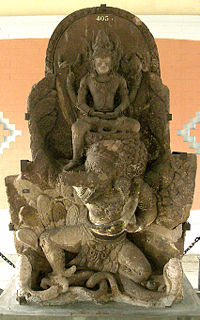
scattered in Belahan tirtha , on
Penanggungan, where in one of
portrayed as Vishnu riding
two goddesses; Shri and
consorts of Airlangga.
and his ashes were probably
eastern slopes of Mount
waterspout statues he was
Garuda, flanked by statues of
Lakshmi portrayed the two queen
-
After the death of
between Janggala and Panjalu
In that year King Mapanji
succeed on conquering
king named Samarotsaha
he was the son in law of
Airlangga, a civil war broke out
that continues until 1052.
Alanjung Ahyes of Panjalu
Janggala. However in 1059 another
ascend the throne of Janggala,
Airlangga.

Dart Overview : Indonesia's gas market overview

Dart Energy Limited Singapore (Head Office) 152 Beach Road, #19-01/04 The Gateway East Singapore 189721

Indonesia's gas market overview

Indonesia has Asia's third largest population with domestic oil and gas demand growing strongly but declining production. In areas of high population density, especially the island of Java, there is a growing energy supply-demand imbalance . In other areas, significant gas intensive industries exist, such as the Bontang LNG plant in Kalimantan, which is amongst the world's largest LNG production facilities. The Bontang LNG plant is currently operating significantly below capacity due to shortfalls of gas feedstock. The estimated gas shortfall in Indonesia is c.900 mmscf/day. Accordingly, Dart believes that Indonesia has a significant and growing market for natural gas, including CBM. A specific plan needs to be developed for each Indonesian "sub-market", given that Indonesia is geographically comprised of many islands, and each has unique gas demand, supply and infrastructure considerations. Indonesia has vast coal deposits and there are many areas with potentially large gas and CBM reserves, scattered across the entire Indonesian archipelago. Gas supply prices in Indonesia have increased sharply over the last few years but still remain at levels about one third that of oil-price equivalent.

CBM overview

Indonesia is considered to be one of the most CBM resource rich countries in Asia. Estimates of resource vary, although a government estimate of 453 Tcf is often quoted. Dart Energy has focused its activities in Indonesia in two regions - South Sumatra and Kalimantan - which Dart Energy considers to represent the best prospects for establishing a successful CBM business in Indonesia. These two regions are estimated to account for 60% of Indonesia's CBM resources. They also have developed gas infrastructure and established local and export gas markets and are, for different reasons, experiencing gas supply-demand imbalances South Sumatra is proximate to Java, the main population centre of Indonesia (over 120 million people), which is energy and gas short. Pipeline infrastructure already exists to transport gas from South Sumatra to this market. East Kalimantan is short of gas. In particular, the Bontang LNG plant is operating well below capacity due to declining conventional gas supply. Kalimantan has highly developed coal infrastructure as well as pipeline infrastructure, primarily servicing the Bontang LNG plant.

Miss World 2013 in Jakarta and Bali

Miss World 2013

Indonesia to host the Miss World for the first time. Indonesia became the first Southeast Asian country that hold this contest in history. Miss World 2013 is the fourth international beauty contest held in Indonesia after Miss ASEAN in 2005, the International Man in 2007, Mister International 2010, and Miss Coffee International in 2012.
Miss World 2013 will be the 63rd edition of the Miss World beauty pageant, which was held on 28 September 2013 in Jakarta and Bali, Indonesia as co-host, where quarantine will be held in Nusa Dua, Bali while the coronation night will be held at the Sentul International Convention Center, Bogor, Indonesia. Miss World 2012, Yu Wenxia of the People's Republic of China will crown his successor at the end of the show.
Majelis Ulama Indonesia, MUI, before, they had issued a statement to reject the implementation Miss Click the Word, because the contest is to make women as objects and only used as a platform looking for profit alone.
However, this event has great benefits for Indonesia, especially in terms of tourism and the economy. By inviting participants from 120 countries and the presence of hundreds of media from around the world, this event can introduce the culture and tourism, as well as shows Indonesia is safe for investment.
"Also there are 40 Indonesian designers whose work will be used contestant. It will be seen the world. And not only benefits Bali, but also Indonesia as a whole."
At this event, Indonesia will be represented by Vania Larissa Click, winner of the Miss Indonesia.


Miss World 2013 Schedules

Sept 3: Contestants arrive in Bali. Settled at The Westin Resort Nusa Dua
Sept 3-7: Training contestants, audition, filming and rehearsals
Sept 7-8: Miss World 2013 Golf Tournament at Nirwana Bali Golf Club.
Sept 8: Miss World 2013 Opening Ceremony and Welcome dinner A visit to the city of Yogyakarta Group of contestants arrive in Jakarta
Sept 20: Miss World TOP Model Final at JCC Plenary Hall Jakarta
Sept 22-26: Miss World Final rehearsals Sept 27: Miss World 2013 DRESS REHEARSAL
Sept 28: 63rd MISS WORLD FINAL 2013 (19:30 to 22:00 local time) at the Sentul International Convention Center, Sentul City; Miss World Coronation Ball Sept 28: Coronation Dinner Miss World 2013 at the Sentul International Convention Center
Sept 29: Contestants leave Jakarta

Denise Ayena , representatives of Cameroon who love fried riceDenise Ayena , representatives Cameroon in the event the Miss World 2013 beauty reveals things he liked from Indonesia : fried rice ." What I love about Indonesia , fried rice , " he said at the opening night ceremony of Miss World 2013, which takes place at the Bali International Convention Center ( BICC ) Westin Hotel , Nusa Dua , Sunday ( 08/09/2013 ) .Ayena along with four colleagues from the Netherlands , Spain , Puerto Rico , and the host Indonesia expressing his opinion about Indonesia and Miss World 2013.Dutch contestant Jacqueline Steenbeek judge the beauty of Indonesia as a haven ."Indonesia is like heaven , its friendly , good food , beautiful nature and interesting culture , " he said .While Elena Ibarbia of Spain want to walk around to various places in Indonesia when given the opportunity to stay longer .Contestants Puerto Rico Nadyalee nervous Torres admitted to the competition for the title of Miss World 2013." But I am happy to be here , this is a remarkable experience . "Vania Larissa while representing Indonesia hope this can be a great event to show off the beauty of Indonesia in the world . " Everybody, let's enjoy and have fun , " said Vania
Yuki Kato amazed by the beauty of the contestants of Miss World 2013Actress Yuki Kato admitted amazed by the beauty of the contestants of Miss World 2013. " All the pretty . Swear , " he told Tempo in Nusa Dua , Bali , on Sunday , 8 September 2013 .According to him , the most beautiful women candidates this universal look like dolls . "Oh my god they are like living doll ( dolls live ) , " said the artist , who became known after starring in soap operas Primates Beautiful , was shaking his head .When asked to choose who perform the most prettiest , student of the Faculty of Social Sciences dna Political Science, University of Indonesia was willing to share the name of his choice . " Miss Japan , Miss China and Miss Puerto Rico , " he said .Miss World 2013 is being held in Nusa Dua . The event was officially opened at the Westin Hotel , on Sunday. Since that date the contestants follow the quarantine and not allowed to speak to the media .Bali quarantine period lasts until 15 September 2013 . Quarantine period is planned to continue in Jakarta until the final event , which is planned to take place on 28 September 2013 .
Bali is ready to host the finals of Miss World 2013Denpasar - Bali , Bali , says ready to host the Miss World finals in an evening peak " Miss World " which will be held on 28 September 2013 in Sentul , Bogor , West Java , next held invalid . It was delivered by the Governor of Bali Made Mangku Pastika in Denpasar , on Tuesday afternoon ( 10/9 ) .Made Mangku Pastika expressed the readiness of the provincial government of Bali is not a form of pride amid other areas due to the unpreparedness of the security factor . Made Mangku Pastika confirmed the readiness of Bali to host Miss World finals is also not a form of arrogance , but rather on the duties and responsibilities of the provincial government of Bali as part of the unitary state of Indonesia ( Republic of Indonesia ) ." Not that we are arrogant , we are arrogant , we wanted to secede from the Republic of Indonesia , yes no , actually we do the work of this country , " said Made Mangku Pastika . " So do not get me wrong , because I read in the virtual media , no one thinks like that. I guess it has not been understood . In my opinion we will carry out the state and nation , "he added .Secretary General of Laskar Bali , I Ketut Rochineng deliver as an organization Laskar Bali Bali is ready to assist communities in the provincial government of Bali and the Bali Police to secure the implementation of the Miss World . In support of the implementation of the safety of Miss World , Laskar Bali previously been coordinated with the Bali Police and Pecalang ( traditional village security ) ." Always formal coordination with the security forces , we as organizations are not in the ring one , two or three depending on our involvement in these activities , as much as we could engage to maintain the security of Bali , including pecalang , including indigenous villages , " said I Ketut Rochineng .Formerly Chairman of the Organization of the Miss Indonesia , Liliana Tanoesoedibjo claim to understand the pros and cons of the implementation of the Miss World in Indonesia. According to Liliana important thing to remember is that the implementation of the Miss World is not an attempt to embarrass Indonesia at international level ." This activity is to uphold the name of Indonesia in foreign high . If you do not understand about this activity please ask directly to me or to our team , " said Liliana Tanoesoedibjo .According to the plan , 130 Miss World contestants , next Wednesday ( 11/9 ) will visit Besakih in Karangasem regency . The contestants will see people's traditions around the biggest temple in Bali . Of Pura Besakih , the contestants will go on to visit the Museum Rudana in Gianyar regency .
Miss World 2013 is expected to be adapted to the culture of IndonesiaDenpasar , JAKARTA - The concept of implementing the Miss World contest in Indonesia this year are expected to be adapted to the culture and norms that exist in Indonesia. Including the norms of decency in dress by not holding a bikini contest use .Hope was delivered Fueling Development Team Leader Family Welfare ( PKK ) center Vita Nova Gamawan Fauzi keteranganya in Denpasar in Bali on Monday ( 2/9 ) afternoon . Vita Nova Gamawan Fauzi said if the Miss World pageant adapted to Indonesian culture there can be no denial in Indonesia. In addition to the allegations that the Miss World contest as a form of harassment against women also would not have happened if the contest is not merely assessing one's beauty , but also see from the knowledge and insight of the contestants ." But it is no human resources not only beauty but others also have them , as well as well as the pride we took up the potential of the area through the Miss World event , " said Vita Nova .Meanwhile, Bali Governor Made Mangku Pastika hope no rejection excessive action against the Miss World contest . Given the Miss World pageant is not a part of the porn action .Mangku Pastika said , " So what's so opposed ? There is no pornography or pornographic they want , what's so wrong , so that ( until ) opposed it corny, a bit strange , the same as the regular travelers , conference or he makes the race in Bali . "While about 30 students who are members of the Alliance of Balinese Hindu Indonesian Young staged in Metro Chess Statue Front Denpasar . I Gede Mas Action Coordinator Megantara declare the action was held in support of the Miss World contest in BaliI Gede Mas Megantara said , " We support the Miss World is in Bali , if you ask me it's Miss World in Bali , the Balinese culture could be increased again , two tourism in Bali is more famous , when will Indonesia ( able ) to host the event the world . "30 students who are members of the Alliance Bali Indonesia Young Hindu staged support the Miss World contest in Bali (Photo : VOA / Muliarta ) .30 Balinese students who are members of the Alliance of Young Indonesian Hindus staged to support the implementation of the Miss World contest in Bali ( Photo: VOA / Muliarta ) .Meanwhile, the organizers of the Miss World pageant is committed to abide by the rules of religion and culture in Indonesia. Public Relations Executive Committee Election Miss World Syafril Nasution as evidence that the implementation of the Miss World in Indonesia while respecting tradition and culture is going dipentaskannya Kecak Dance and the various dances of Indonesia at the Miss World opening on 8 September. In addition the committee has also designed the activities in which the contestants will wear clothing designed by the designer of Indonesia.Previously , a number of Islamic organizations and the Indonesian Ulema Council urged the government to cancel the Miss World organization in Indonesia because it does not conform to the cultural values ​​of Indonesia.A number of Islamic organizations such as Muhammadiyah , Hizbut Tahrir Indonesia , the Islamic Defenders Front rejected the implementation of the international beauty arena . Indonesian Ulema Council ( MUI ) also have the same attitude .A number of Islamic organizations and the MUI asked the Indonesian government to cancel the beauty pageant world in Indonesia.Chairman of the Central Board ( PP ) Muhammadiyah Youth , Partaonan Daulay Saleh , said that Miss World is not an effective way to introduce Indonesia in the international arena .He considered himself the Miss World contest is very far from the cultural values ​​, traditions , and wisdom of the Indonesian nation . According to the beauty queen contest is the commercialization of the female form .This activity continued commercialization aspect is huge . At some point this kind of commercialization Saleh said it demeans women . He said there are a lot of sponsors and companies are taking advantage of the ' display ' hundreds of women from various countries. Therefore, undue Indonesia bandwagon facilitate such activities .Saleh said it was a lot of other competitions that could be the name of Indonesia in a way that is more dignified .Daulay Partaonan Saleh said , " Miss World is not in accordance with Indonesian culture , tradition and local wisdom in Indonesia. We never show a woman of her beauty just because humans shown completely not only from the physical , facial beauty , how to walk and so on . "It also expressed the Chairman of the Indonesian Ulema Council ruf Amin . According to contest it just makes women as objects and only used as a platform looking for profit only. To reject it adds MUI context Worldwide pageant was held in Indonesia.According ruf , it has submitted to the government about the refusal ." Yes that's Miss World beauty showing off . According to past experience - and , according to MUI does not match his religious beliefs and culture of our nation because the MUI rejected because he's showing off the showroom it . MUI already made ​​a statement and convey to the government , " said Ma ' ruf Amin .Meanwhile Miss World organizers say the Miss World Budi Rustanto this time adapted to the cultural values ​​and customs in Indonesia.Competition with bikini costumes , such as add Budi turned into a fashion show on the beach with all the Balinese sarong -clad contestants .Miss World in Indonesia Budi said while promoting Indonesian tourism to the international world ." All that is worn during in Indonesia such as kebaya , batik designers are required to use all of Indonesia , Indonesian material molar , Indonesian foods . Mempromote point is how to help the government to get a tourist tourism , the potential seen Indonesian society safe , comfortable so that investment will continue , " said Budi Rustanto .Miss World Contestants 63rd will be in Bali for more than three weeks before the evening peak held in Sentul , Bogor , on 28 September.Peserta of Israel - which does not have diplomatic relations with Indonesia and certainly will not participate in the selection the .A number of Israeli mass media wrote withdrawal because Indonesia as the host does not recognize Israel .
Miss World without appearing bikiniLONDON - The Miss World contestants this year will not be appearing in a bikini at a beauty contest that took place in Bali September 2013 , in order to avoid the possibility of certain groups feel offended .Miss World organizers said that 137 women in this competition will be wearing a one-piece , some of which are covered with gloves ." This makes sense in a country that prefers one-piece dress , " said the chairman of the Miss World Organisation in London , Julia Morley , Thursday ( 6/6 ) ."I think Indonesia is not just a country that has a culture like that . However we want to work with respecting each country , and I think if we go into a country , there is no reason not to behave honor ( local tradition ) . "Morley denied that the decision to not show bikini was made after protest from Indonesian regarding the contest .However , local media reports said a number of conservative groups have protested the implementation of the contest , mainly because of objections about the bikini .The Jakarta Post reported that the Deputy Minister of Tourism and Creative Economy , Sapta Nirwandar , said the government had asked the organizers of Miss World following the tradition in Indonesia." Most people in Indonesia is still considered taboo woman wearing bikini and showing parts of the body , " the paper wrote .Indonesian Ulema Council ( MUI ) said it would send a letter to President Susilo Bambang Yudhoyono to demand cancellation of the implementation of the beauty contest ." The contest was just an excuse to show women's body parts that should be closed , " said Mukri Aji , scholar of MUI West Java . " It violates the teachings of Islam . "Hard-line Islamic group Hizbut Tahrir Indonesia says plans to protest and urged the competition moved to another place .Miss World pageant to be held on 63rd Sept. 28 in Indonesia. This contest was first held in 1951 , and during the first decade , the clothing of the contestants made ​​a lot of people by surprise and got media coverage , as rising viewers to the show that aired on the television . ( AP / Reuters )

Justice and Civil Service Corruption in Indonesia

Corruption in Indonesia

Corruption in IndonesiaThere are two main areas where public sector corruption in Indonesia can be found. It is justice and civil service sectors. While hard data is difficult to collect on corruption, corruption in Indonesia is clearly visible through public opinion, collected through surveys and observation of how each system is running. Corruption in the justice sector is seen by the ineffectiveness of law enforcement, failure to uphold justice, then destroy the rule of law. Areas of corruption in the sector, including the police and the courts. In the Public Sector Integrity Survey 2008, the Supreme Court of the lowest rank in the integrity compared to other public services in Indonesia. The court deemed to make an unfair decision and have high legal fees.

Evidence of corruption in the civil service are from a survey conducted in this sector. Some survey found that nearly half were found to have accepted bribes. Civil servant admits corruption.

Corruption is an
that poses economic and
Interference in public laws and
or private gain has
Indonesia.
important development challenge
social costs in Indonesia.
policies for the sake of personal
weakened the competitiveness of
-
About a quarter of the ministry suffered a transfer budget in Indonesia. Households spend about 1% while companies spend at least 5% of the monthly revenue payments are not authorized. Social costs of corruption in Indonesia, including the weakening of government institutions and the rule of law. Increase in crime due to smuggling and extortion involving institutions that are supposed to protect citizens. The people who suffer most are the poor because they are pressured to finance the payment through their already tight budgets and effectiveness of social services can not be accessed directly. The concerns voiced by the urban poor in Indonesia alone in the joint World Bank-Partnership for Governance Reform research project, titled "Corruption and Poor".
There have been some
with the creation of the
Commission . It has been an
Indonesia's official reform
However, the efforts made are
limited success to reduce
impeded the improvement of
economic constraints, and the
corruption itself.
efforts to battle corruption
ombudsman and the Assets Auditing
important agenda and part of
program since May 1998.
questionable as there has been
corruption. Some obstacles that
corruption included political and
complex nature of the
-
Most recently, these
ordering corruption convicts to
have stolen. On 06 March
Court sentenced Ridwan
Energy and Mineral Resources
for rigging a tender bid for
system project in 2009 worth
efforts have taken the shape of
pay back all the money they
2012, the Jakarta Corruption
Sanjaya, an official from the
Ministry, to six years in prison
a home solar energy
IDR526 billion .
Ridwan was found guilty
billion in kickbacks,
state losses. The Corruption
it will use Ridwan’s
the investigation on the
Solar Home System project.
of accepting IDR14.6
resulting in IDR131 billion in
Eradication Commission stated that
verdict as material to develop
graft scandal involving the
-

Related Sites for Corruption in Indonesia

Borobudur ship from Indonesia

Borobudur ship

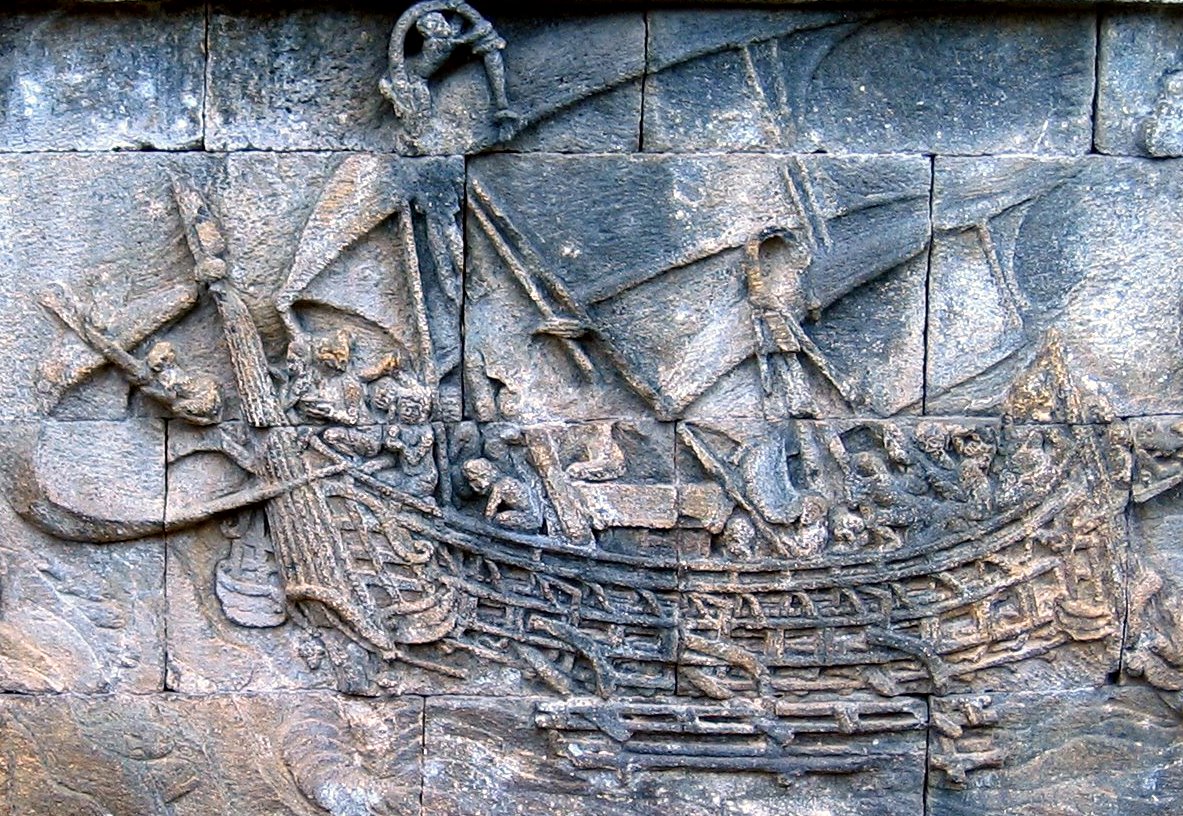
Borobudur shipA Borobudur ship is the 8th century wooden double outrigger sailed vessel of Maritime Southeast Asia depicted in some bas reliefs of Borobudur Buddhist monument in Central Java, Indonesia. The function of outrigger is to stabilize the ship, single or double outrigger canoe is a typical feature of Austronesian boat cruise and the most likely type of ship used for shipping and their exploration in Southeast Asia, Oceania, and Indian Ocean. The ships depicted on Borobudur was most likely the type of vessels used for inter-insular trades and naval campaign by Sailendran and Srivijayan thalassocracy empire that rules the region around 7th to 13th century.
Borobudur shipThe bas reliefs of Borobudur is known to depict everyday life of 8th century ancient Java, from the courtly palace life to those of commoners in the village. It depicted temple, marketplace, architecture, flora and fauna, dress, jewelry and fashion, as well as mode of transportation such as palanquin, horse carriage and ship.
In 1982, Philip Beale, a British citizen sailor previously served for the British Royal Navy, visiting Borobudur to learn traditional boats and marine tradition and became fascinated with ten bas relief images of ancient vessels depicted on Borobudur. Since then he planned to reconstruct this ancient ship and reenacted the ancient maritime trade route. Working from very limited data — 5 stone carvings — Beale planned to head an expedition team in reconstructing the ship and sailing it from Jakarta in Indonesia to Madagascar and then around the Cape of Good Hope to the west coast of Africa.
Extensive research and design work preceded the building of the ship by a team of experienced Indonesian ship builders, based in the Kangean Islands some 60 miles north of Bali. Nick Burningham, an acknowledged expert on Indonesian watercraft and maritime archaeology, supervised the building of the vessel. The ship was built by Assad Abdullah al-Madani, a seasoned Indonesian traditional ship builder and his men, with little more than a balsa wood model that Nick Burningham had created to help him. The vessel is named Samudra Raksa and was inaugurated in Benoa Harbor, Bali in 15 July 2003 by Minister for Tourism and Culture of the Republic of Indonesia I Gede Ardika together with Philippe Delanghe, UNESCO Office Jakarta Program Specialist for Culture.
The expedition took
August 2003 until February
Priok harbour, Jakarta on 30
President Megawati
of Tema, Accra, Ghana on 23
demonstrated ancient trading links
The treacherous Cinnamon
Indonesian waters across the
Seychelles, Madagascar, and South
place during the 6 months from
2004. It started in Tanjung
August 2003, launched by
Sukarnoputri, and arrived in the port
February 2004. The epic voyage
between Indonesia and Africa .
shipping route took vessels from
Indian Ocean past the
Africa to Ghana.
Today the Samudra Raksa
in Samudra Raksa Museum,
meters north of Borobudur
Borobudur Archaeological Park.
Raksa was opened by
Prof.Dr. Alwi Shihab of the
August 2005, a fitting tribute
worked with and supported the
ship is housed and displayed
located just a few hundred
temple within the complex of
The Ship Museum Samudra
Coordinating Minister for Welfare
Republic of Indonesia on 31
to the crew and all who
Borobudur Ship Expedition.

Related Sites for Borobudur ship

National costume of Indonesia

National costume of Indonesia

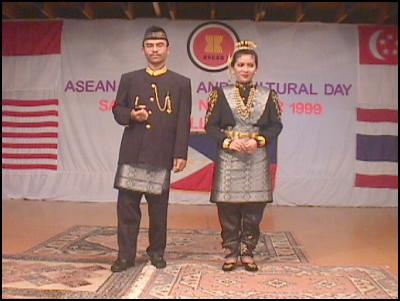
National costume of IndonesiaNational costume of Indonesia are national costume that represent Republic of Indonesia. It is derived from the Indonesian culture and traditions of traditional Indonesian textiles. Currently the most widely recognized national costumes Indonesia is Batik and Kebaya, although originally those costumes are mainly belongs within the culture of Java and Bali, most prominently within Javanese, Sundanese and Balinese culture. Since Java is the center of Indonesian politics since colonial era, as well as the majority of Indonesian population, it is only natural that the folk costume from Java are elevated into national status.
National costume of IndonesiaNational costumes are worn during official national as well as traditional ceremonies.
The most obvious display of Indonesian national costumes can be seen by the type of costumes wore by President of Indonesia and Indonesian 1st lady, and also Indonesian diplomatic officials during gala dinner. The national costumes of Indonesia can be seen wore by the guest of Indonesian traditional wedding ceremony.
Batik is recognized as
identity of Indonesian culture.
batik as a Masterpiece of Oral
Humanity on October 2, 2009. As
UNESCO insisted that
heritage.
one of the important
UNESCO designated Indonesian
and Intangible Heritage of
part of the acknowledgment,
Indonesia preserve their
-
The kebaya is the
although it is more accurately
Sundanese and Balinese peoples.
sheer material such as silk,
semi-transparent nylon or polyester,
pattern embroidery. Kebaya
batik kain panjang, or other
ikat, songket with a colorful
national costume of Indonesia,
endemic to the Javanese,
It is sometimes made from
thin cotton or
adorned with brocade or floral
usually worn with a sarong or
traditional woven garment such as
motif.
The earliest form of
of the Javanese Majapahit
existing female Kemban, torso
women to be more modest and
Islam religion. Aceh, Riau
Northern Sumatra adopted the
of social expression of
refined Javanese overlords.
Kebaya originates in the court
Kingdom as a means to blend the
wrap of the aristocratic
acceptable to the newly adopted
and Johor Kingdoms and
Javanese style kebaya as a means
status with the more alus or
-
Kebaya is usually worn
events by Indonesian 1st lady,
diplomats, and Indonesian ladies.
ladies attending traditional
Kartini day in 21 April
Kebaya to celebrate and honor
emancipation heroine. During
ceremonies, Balinese women wore
with songket Bali.
during official national
wives of Indonesian
It also worn by Indonesian
ceremonies and weddings. In
Indonesian women usually wear
the Indonesian women
Balinese traditional
colorful Balinese style kebaya
-
Traditionally in Southeast Asia peci, songkok, or kopiah are associated with muslim men's cap. However in Indonesia, the songkok has become the national headdress with secular nationalist connotations made popular by Sukarno. The name "peci" was probably derived from the Dutch word petje means literary "small hat", or probably derived from the Turkish fez instead. Numbers of Indonesian nationalist movement activist in early 20th century wore peci such as Sukarno, Muhammad Hatta, and Agus Salim. However, as the 1st president of Indonesia it was Sukarno that popularize peci — more precisely plain black velvet peci — as national men's cap of Indonesian, and Indonesian male presidents always wear peci as part of their official presidential attire eversince. Indonesian official palace guards also wore peci as part of their uniform. The Paskibraka or flag raising squad in Indonesian independence day ceremony also wear peci, and there is even female peci version with curved back.

Sunday, September 1, 2013

Prehistoric Period in The Indonesian Archipelago

Prehistoric Indonesia

Prehistoric IndonesiaPrehistoric Indonesia is a prehistoric period in the Indonesian archipelago that spanned from the Pleistocene period to about the 4th century CE when the Kutai people produced the earliest known stone inscriptions in Indonesia. Unlike the clear distinction between prehistoric and historical periods in Europe and the Middle East, the division is muddled in Indonesia. This is mostly because Indonesia's geographical conditions as a vast archipelago caused some parts — especially the interiors of distant islands — to be virtually isolated from the rest of the world. West Java and coastal Eastern Borneo, for example, began their historical periods in the early 4th century, but megalithic culture still flourished and script was unknown in the rest of Indonesia, including in Nias, Batak, and Toraja. The Papuans on the Indonesian part of New Guinea island lived virtually in the stone age until their 1st contacts with modern world in early 20th century. Even today living megalithic traditions still can be found on the island of Sumba and Nias.
Prehistoric IndonesiaGeologically the area of modern Indonesia appeared from under the Southeast Asian seas as the result of the Indian and Australian plates collides and slips under Sunda Plate, sometimes in the early Cenozoic era around 63 millions years ago. This tectonic collission creating Sunda volcanic Arc that has produced chains of islands of Sumatra, Java and the Lesser Sunda Islands. The active volcanic arc creating supervolcano that today become Lake Toba in Sumatra. The massive eruption of Toba supervolcano that occurred some time between 69,000 and 77,000 years ago instigated the Toba catastrophe theory, a global volcanic winter that caused a bottleneck in human evolution. Another notable volcanoes in Sunda Arc is Mount Tambora and Krakatau. The region is known for its instability due to volcano formations and other volcanic and tectonic activities; as well as climate changes; resulted in lowlands drowned occasionally under shallow seas, the formation of islands, the connection and disconnection of islands through narrow land-bridges, etc.
The Indonesian archipelago nearly reached its present form in Pleistocene period. For some periods the Sundaland was still linked with Asian mainland creating the landmass extension of Southeast Asia that enabled the migrations of some Asian animals and hominid species. Geologically the New Guinea island and the shallow seas of Arafura is the northern part of Australia tectonic plate and once connected as a landbridge identified as Sahulland. During the end of last ice age earth experienced global climate change; a global warming with the rising of average temperature caused the melting of polar ice caps and contributed to the rising of sea surface. Sundaland was submerged under shallow sea creating Malacca Strait, South China Sea, Karimata Strait and Java Sea. During this period Malay peninsula, Sumatra, Java, Borneo and the islands around them was formed. On the east, New Guinea and Aru Islands was separated from Australia mainland. The rise of sea surface creating isolated areas that separated plants, animals and hominid species causing further evolution and specification.
In 2007 analysis of cut marks on two bovid bones found in Sangiran, showed them to have been made 1.5 to 1.6 million years ago by clamshell tools, and is the oldest evidence for the presence of early man in Indonesia. Fossilised remains of Homo erectus, popularly known as the "Java Man" were 1st discovered by the Dutch anatomist Eugxne Dubois at Trinil in 1891, and are at least 700,000 years old, at that time the oldest human ancestor ever found. Further Homo erectus fossils of a similar age were found at Sangiran in the 1930`s by the anthropologist Gustav Heinrich Ralph von Koenigswald, who in the same time period also uncovered fossils at Ngandong alongside more advanced tools, re-dated in 2011 to between 550,000 and 143,000 years old. In 1977 another Homo erectus skull was discovered at Sambungmacan
In 2003, on the island of Flores, fossils of a new small hominid dated between 74,000 and 13,000 years old and named "Flores Man" were discovered much to the surprise of the scientific community. This 3 foot tall hominid is thought to be a species descended from Homo Erectus and reduced in size over thousands of years by a well known process called island dwarfism. Flores Man seems to have shared the island with modern Homo sapiens until only 12,000 years ago, when they became extinct. In 2010 stone tools were discovered on Flores dating from 1 million years ago, which is the oldest evidence anywhere in the world that early man had the technology to make sea crossings at this very early time.
The archipelago was
the latest ice age. Early
spread from mainland Asia
Australia. Homo sapiens reached
years ago. In 2011 evidence
neighbouring East Timor, showing
early settlers had
implication the technology needed
reach Australia and other
and consuming large
as tuna.
formed during the thaw after
humans to travelled by sea and
eastward to New Guinea and
the region by around 45,000
was uncovered in
that 42,000 years ago these
high-level maritime skills, and by
to make ocean crossings to
islands, as they were catching
numbers of big deep sea fish such
-
Homo erectus were known
paleolithic stone tools and also
Sangiran and Ngandong. Cut mark
mammalian fossils documents 18
tools of thick clamshell
created during butchery at the
between 1.6 and 1.5 million
document the use of the 1st tools
evidence of shell tool use in the
to utilize simple coarse
shell tools, discovered in
analysis of Pleistocene
cut marks inflicted by
flakes on two bovid bones
Pucangan Formation in Sangiran
years ago. These cut marks
in Sangiran and the oldest
world.
The polished stone
such as polished stone axe
developed by Austronesian people
archipelago. Also during this
the large stone structures
also flourished in
tools of neolithic culture,
and stone hoe, are
in Indonesian
neolithic period in Indonesia,
of megalithic culture
archipelago.
The Indonesian
Austronesian megalith cultures both
megalith sites and structures
Indonesia. Menhirs, dolmens,
stone statues, and step
Punden Berundak were
Java, Sumatra, Sulawesi, and
archipelago is the host of
past and present. Several
are also found across
stone tables, ancestral
pyramid structure called
discovered in various sites in
the Lesser Sunda Islands.
Punden step pyramid and
Pagguyangan Cisolok and Gunung
megalith site also in West Java
terraces, and sarcophagus. The
believed to be the predecessor
Hindu-Buddhist temples structure in
Hinduism and Buddhism by native
Borobudur and 15th-century Candi
step-pyramid structure.
menhir can be found in
Padang, West Java. Cipari
displayed monolith, stone
Punden step pyramid is
and basic design of later
Java after the adoption of
population. The 8th century
Sukuh featured the
-
Living megalith
isolated island off the western
Batak people in the interior
island in East Nusa Tenggara
the interior of South
cultures remained preserved,
into the late 19th century.
cultures can be found on Nias, an
coast of North Sumatra, the
of North Sumatra, on Sumba
and also Toraja people from
Sulawesi. These megalith
isolated and undisturbed well
-
Early Indonesians were animists who honoured the spirits of nature as well as the ancestral spirits of the dead, as their souls or life force could still help the living. The reverence for ancestral spirits is still widespread among Indonesian native ethnicities; such as among Nias people, Batak, Dayak, Toraja, and Papuans. These reverence among others are evident through the harvest festivals that often invoked the nature spirits and agriculture deities, to the elaborate burial rituals and processions of the deceased elders in order to preparing and sending them to the realm of ancestors. The prehistoric spirit of ancestors or nature that possess supernatural abilities is identified as hyang in Java and Bali, and still revered in Balinese Hinduism.
The human livelihood of
simple forest
tools to elaborated
cultivation, domesticated animals,
industry.
prehistoric Indonesia ranges from
hunter-gatherer equipped with stone
agriculture society with grain
with weaving and pottery
-
Ideal agricultural
wet-field rice cultivation as
allowed villages, towns, and
the 1st century CE. These
ethnic and tribal religions.
temperature, abundant rain and
wet rice cultivation. Such
well-organised society in contrast to
simpler form of cultivation
elaborate social structure to
conditions, and the mastering of
early as the 8th century BCE,
small kingdoms to flourish by
kingdoms evolved with their own
Java's hot and even
volcanic soil, was perfect for
agriculture required a
dry-field rice, which is a much
that doesn't require an
support it.

Related Sites for Prehistoric Indonesia