Monday, November 21, 2016

Tangkuban Parahu

Tangkuban Parahu

Tangkuban Parahu
In April 2005 the Directorate of Volcanology and Geological Hazard Mitigation raised an alert, forbidding visitors from going up the volcano. "Sensors on the slopes of the two mountains - Anak Krakatoa on the southern tip of Sumatra Island and Tangkuban Perahu in Java - picked up an increase in volcanic activity and a build up of gases, said government volcanologist Syamsul Rizal."
The name translates roughly to "upturning of (a) boat" or "upturned boat" in Sundanese, referring to the local legend of its creation. The story tells of "Dayang Sumbi", a beauty who lived in West Java. She cast away her son "Sangkuriang" for disobedience, and in her sadness was granted the power of eternal youth by the gods. After many years in exile, Sangkuriang decided to return to his home, long after the two had forgotten and failed to recognize each other. Sangkuriang fell in love with Dayang Sumbi and planned to marry her, only for Dayang Sumbi to recognize his birthmark just as he was about to go hunting. In order to prevent the marriage from taking place, Dayang Sumbi asked Sangkuriang to build a dam on the river Citarum and to build a large boat to cross the river, both before the sunrise. Sangkuriang meditated and summoned mythical ogre-like creatures -buta hejo or green giant(s)- to do his bidding. Dayang Sumbi saw that the tasks were almost completed and called on her workers to spread red silk cloths east of the city, to give the impression of impending sunrise. Sangkuriang was fooled, and upon believing that he had failed, kicked the dam and the unfinished boat, resulting in severe flooding and the creation of Tangkuban Perahu from the hull of the boat.

Related Sites for Tangkuban Parahu

Gloria Gaynor

Gloria Gaynor

Gloria Gaynor is a highly regarded American singer, songwriter, and author, who has achieved great success in the music industry. She is most famous for her disco-era hits, including "I Will Survive," which reached number one on the Hot 100 chart in 1979. In addition to this iconic song, Gaynor has released several other popular tracks, such as "Never Can Say Goodbye," which reached number nine on the Hot 100 chart in 1974, "Let Me Know (I Have a Right)," which peaked at number 42 on the Hot 100 chart in 1980, and "I Am What I Am," which reached number 82 on the R&B chart in 1983.

Gaynor was born and raised in Newark, New Jersey, where she was raised by her grandmother, who played a significant role in her upbringing. According to her autobiography, I Will Survive, there was always music in Gaynor's house, and she grew up listening to popular artists like Nat "King" Cole and Sarah Vaughan. Her love for music inspired her to pursue a career in singing, and she began performing at local nightclubs and bars in the New York City area.

Throughout her career, Gaynor has earned numerous accolades for her work in the music industry, including a Grammy Award for Best Disco Recording in 1980. She has also been inducted into the Dance Music Hall of Fame and the New Jersey Hall of Fame. In addition to her successful music career, Gaynor has also written several books, including her autobiography, I Will Survive: The Book, which details her life and career in the music industry.

Gloria Gaynor
Despite her love for singing, Gaynor didn't pursue a career in music until after she graduated from high school. She worked odd jobs, including as a secretary and a waitress, before landing a gig as a backup singer for a local band. In 1965, she signed her first recording contract with a small label called Johnny Nash's JAD Records. However, her singles failed to chart, and Gaynor soon left the label. She continued to perform and record throughout the 1970s, but it wasn't until she signed with Polydor Records in 1974 that she achieved mainstream success.

Gaynor's breakthrough came in 1979 with the release of "I Will Survive," a song that became an anthem of empowerment for many women. The disco hit, which Gaynor co-wrote, won the Grammy Award for Best Disco Recording in 1980 and remains one of the most recognizable songs in popular culture. Gaynor continued to release albums and singles throughout the 1980s and 1990s, and she remains an active performer today. In addition to her music career, Gaynor is also a philanthropist and an advocate for LGBTQ rights.

After her stint with the Soul Satisfiers, Gaynor went on to form her own band, The Johnny Paiva Orchestra. She also signed with Columbia Records in 1974, releasing her first album "Never Can Say Goodbye". The album included the title track, which became a top ten hit on the Billboard Hot 100 chart. This success led to Gaynor being named "Queen of the Discos".

In 1978, Gaynor released the song that would become her signature hit, "I Will Survive". The song became an anthem for the feminist and LGBTQ+ movements, and won the Grammy Award for Best Disco Recording. Gaynor continued to release successful albums throughout the 1980s, and in 1984, she released the song "I Am What I Am", which became another anthem for the LGBTQ+ community.

In addition to her music career, Gaynor has also appeared on television and in films, including a cameo in the movie "The Last Days of Disco" (1998) and an appearance on the TV show "Ally McBeal" (2000). She has also been involved in various charitable causes, including HIV/AIDS research and anti-bullying initiatives.

Overall, Gloria Gaynor's impact on the music industry and popular culture cannot be overstated. Her powerful vocals and empowering lyrics continue to inspire and uplift audiences around the world.

After the success of her first album, Gloria Gaynor continued to establish herself as a disco queen in the late 1970s. In 1978, she released the album Love Tracks, which contained the hit song "I Will Survive". The song quickly became an anthem of female empowerment and went on to win the Grammy Award for Best Disco Recording in 1980. "I Will Survive" became Gaynor's signature song and is still played at parties and events today.

Gaynor continued to release successful albums throughout the 1980s, including I Have a Right (1979), Stories (1980), and Gloria Gaynor's Park Avenue Sound (1981). However, by the end of the decade, disco had fallen out of favor with the mainstream audience and Gaynor's success began to wane. Despite this, she continued to record and release music throughout the 1990s and 2000s, with varying levels of success.

In addition to her music career, Gaynor has also been involved in various humanitarian and charitable causes. She has worked with organizations such as Childhelp, a non-profit dedicated to the prevention and treatment of child abuse, and the Susan G. Komen Breast Cancer Foundation. In 2005, she released a gospel album, "Gloria Gaynor Presents the Gospel Queen", which featured collaborations with various gospel artists.

Overall, Gloria Gaynor's contributions to the disco genre and her role in establishing "I Will Survive" as an iconic feminist anthem have cemented her place in music history.

Gloria Gaynor's success in the disco era was not just limited to her well-known hits. Some of her lesser-known singles, such as "Honey Bee," "Casanova Brown" (1975), and "Let's Make A Deal" (1976), gained popularity in clubs and reached the Top 5 on Billboard's disco charts. However, after her 1976 album, I've Got You, Gaynor decided to shift from her hit production team and work with other producers. This decision proved to be a challenge as her subsequent producers didn't seem to match Gaynor's vocal approach and style as well.

Over the next few years, Gloria Gaynor released albums like Glorious and Park Avenue Sound, but they only managed to generate a few moderate hits. However, in late 1978, she made a major comeback with the release of her album Love Tracks, which included her iconic song "I Will Survive." The lyrics of this song were written from the perspective of a woman who had just been dumped, telling her former lover that she could survive without him and did not want anything more to do with him. The song became a huge success and something of an anthem of female empowerment. Even today, "I Will Survive" remains a popular choice for office parties and karaoke nights, cementing Gloria Gaynor's legacy as a disco icon.

Gloria Gaynor's song "I Will Survive" is one of the most iconic disco hits of all time, but it had humble beginnings as the B-side of a single released by Polydor Records in late 1978. The A-side, "Substitute", was already a hit for the South African girl-group Clout, and was considered more "radio friendly". However, Boston Disco Radio DJ Jack King flipped the record over and was stunned by what he heard. He played "I Will Survive" repeatedly, and his listeners went wild for it. This massive audience response forced the record company to switch the songs, with subsequent copies of the single listing "I Will Survive" on the A-side.

The song's success continued to build, earning Gaynor the only Grammy Award ever given for Best Disco Recording in 1980. Interestingly, the song was unique for its time in that Gaynor had no background singers. Also, unlike her earlier disco hits, the track wasn't pitched up to make it faster and to render Gaynor's recorded voice in a higher register than that in which she actually sang. Most disco hits at the time were heavily produced, with multiple voices, overdubs, and adjustments to pitch and speed. In contrast, "I Will Survive" had a much more spare and "clean" sound.

In late 1979, Gaynor released the album I Have a Right, which contained her next disco hit, "Let Me Know (I Have a Right)", which featured Doc Severinsen of The Tonight Show fame on trumpet solo. Gaynor also recorded a disco song called "Love Is Just a Heartbeat Away" in 1979 for the vampire movie Nocturna: Granddaughter of Dracula, which featured a number of disco songs. Overall, Gaynor's impact on the disco genre and pop music in general is undeniable, with "I Will Survive" remaining a beloved anthem for generations.

Gloria Gaynor is an American singer who gained fame during the disco era of the 1970s. Her hit songs, "I Will Survive", "Never Can Say Goodbye", and "Let Me Know (I Have a Right)" became staples of the disco scene, and "I Will Survive" is still considered an anthem of female empowerment today.

However, in 1980 and 1981, Gaynor's two disco albums were largely ignored in the US due to the backlash against disco music. The singles from these albums failed to register on urban contemporary radio, where disco music remained popular. Gaynor became disillusioned with her past and turned to Christianity in 1982. She did not release an album that year, but in 1983, she released a self-titled album that marked a departure from her disco roots.

The album featured a patriotic song called "America" and a new version of "I Will Survive" with changed lyrics that reflected her Christian faith. While the album was not a commercial success, Gaynor found new success in 1984 with her album I Am Gloria Gaynor, thanks to the hit song "I Am What I Am". The song became popular in dance clubs and made Gaynor a gay icon.

However, her career went into a sharp decline after this hit, and her 1986 album The Power of Gloria Gaynor was a commercial failure. She continued to make a living outside of the US, where there was never any disco backlash. Despite the ups and downs of her career, Gaynor remains a beloved figure in the music world, and her songs continue to inspire and empower people around the globe.

After a long hiatus, Gloria Gaynor's career received a second wind in the 1990s with the worldwide disco revival movement. This led to her performing in various concerts and events across the globe. During the late 1990s, she made a transition to acting, guest starring on popular television shows such as The Wayans Bros, That '70s Show, and Ally McBeal. She also did a limited engagement performance in Broadway's Smokey Joe's Cafe, which helped her re-establish her status as a performer.

In 2001, Gaynor's classic hit "I Will Survive" was performed at the 30th Anniversary Concert for Michael Jackson, which further cemented her place in the world of music. In 2002, she returned to the recording studio after a long gap of 15 years and released her first album titled I Wish You Love. The album's two singles, "Just Keep Thinking About You" and "I Never Knew", both topped Billboard's Hot Dance Music/Club Play charts and also received moderate to heavy dance format radio airplay. "I Never Knew" also charted at #30 on Billboard's Adult Contemporary chart.

In 2004, Gaynor re-released her 1997 album The Answer as a follow-up to her successful album I Wish You Love. The album included her popular club hit "Oh, What a Life". On September 19, 2005, Gaynor was honored twice when she and her music were inducted into the Dance Music Hall of Fame. She was inducted in the Artist Inductees category along with fellow disco legends Chic and the late Sylvester. Her classic anthem "I Will Survive" was also inducted under the Records Inductees category.

In January 2008, The American Diabetes Association named Gaynor the Honorary Spokesperson of the 2008 NYC Step Out To Fight Diabetes Walk. She has continued to perform and tour across the world and her music continues to be beloved by generations of fans.

Throughout the late 2000s, Gloria Gaynor continued to make numerous television appearances to promote the 30th anniversary of her iconic hit "I Will Survive". In 2009, she appeared on The John Kerwin Show, The Wendy Williams Show, and The View, showcasing her enduring popularity and talent. She also appeared on Last Comic Standing and The Tonight Show in 2010, further cementing her place in popular culture.

Despite almost 30 years passing since its initial release, "I Will Survive" remains a staple in popular music and Gaynor's career. She continues to tour around the world, performing the song on various television shows and venues. The song has also been remixed by various artists during the 1990s and 2000s, including Lonnie Gordon, Diana Ross, Chantay Savage, and rock group Cake. Additionally, it continues to receive recurrent airplay on nearly all Soft AC and Rhythmic format radio stations, ensuring its enduring presence in mainstream culture.

In a 2012 interview, Gaynor expressed her gratitude for the continued success of "I Will Survive", saying, "It feels great to have such a song like that because I get kids five and six years old telling me they like the song, and then people seventy-five and eighty. It's quite an honor." Gaynor and her husband have been longtime residents of Green Brook Township, New Jersey. As a devout Christian, she has also been recording a Contemporary Christian album, which was slated to be released in late 2012.

Related Sites for Gloria Gaynor

Thursday, November 17, 2016

Pop Rock

Pop Rock

Pop Rock
Pop rock is a music genre which mixes a catchy pop style and light lyrics in its guitar-based rock songs. There are varying definitions of the term, ranging from a slower and mellower form of rock music to a subgenre of pop music. The detractors of pop rock often deride it as a slick, commercial product, less authentic than rock music.
Pop rock has been described as an "upbeat variety of rock music represented by artists such as Elton John, Paul McCartney, Rod Stewart, Chicago, and Peter Frampton." Critic Philip Auslander argues that the distinction between pop and rock is more pronounced in the US than in the UK. He claims in the US, pop has roots in white crooners such as Perry Como, whereas rock is rooted in African-American-influenced forms such as rock and roll. Auslander points out that the concept of pop rock, which blends pop and rock is at odds with the typical conception of pop and rock as opposites. Auslander and several other scholars such as Simon Frith and Grossberg argue that pop music is often depicted as an inauthentic, cynical, "slickly commercial" and formulaic form of entertainment. In contrast, rock music is often heralded as an authentic, sincere, and anti-commercial form of music, which emphasizes songwriting by the singers and bands, instrumental virtuosity, and a "real connection with the audience".
Simon Frith's analysis of the history of popular music from the 1950s to the 1980s has been criticized by B. J. Moore-Gilbert, who argues that Frith and other scholars have over-emphasized the role of "rock" in the history of popular music by naming every new genre using the "rock" suffix. Thus when a folk-oriented style of music developed in the 1960s, Frith terms it "folk rock", and the pop-infused styles of the 1970s were called "pop rock". Moore-Gilbert claims that the approach unfairly puts rock at the apex, and makes every other influence become an add-on to the central core of rock.
As with many musical genres, what constitutes "pop rock" is subjective. As such, music critics and journalists have differing opinions on which category a band should be placed in. Billboard magazine provides one perspective on how to categorize "pop rock" groups from the 1970s to the 2000s. Other perspectives from other magazines and individual music journalists and critics are also provided.
Pop-rock soloists and groups from this era include Three Dog Night, the Eagles, Elton John, Bee Gees, Fleetwood Mac, Billy Joel, Paul McCartney and Wings, The Knack and Olivia Newton-John, among others. The Encyclopxdia Britannica calls the Bee-Gees an "English-Australian pop-rock band that embodied the disco era of the late 1970s." A university course on the history of popular music claims that Three Dog Night were "one of the most popular bands of the late Sixties early Seventies; pop rock, singles-oriented sound with soul-influences".
Some of the pop-rock soloists and groups from the early 1980s include Daryl Hall and John Oates, Stevie Wonder, Michael Jackson, Stevie Nicks and Phil Collins. At the start of the decade, Queen had moved away from their hard rock roots and more towards pop rock. In 1980, with the demise of disco, the "music industry floundered in 1980 looking for something to fill the void" and help to boost falling sales. For a period, "easy listening" pop was the top seller. Music critic Michael Gross called it "commercial Cotton candylovers": "Magic" by Olivia Newton-John; "Sailing" by Christopher Cross; "You've Lost That Lovin' Feelin'" by Hall & Oates, and others. The "syrupy pop-rock of Air Supply" hits such as "All Out Of Love" "best exemplified the formula for chart success" during this period. For the later part of the 1980s, Billboard lists: Huey Lewis and the News, Bryan Adams, Tina Turner, Cher, Sheena Easton, Def Leppard, Roxette, Billy Ocean, George Michael, Phil Collins and Madonna among others, as significant pop rock performers of the decade. Michael Jackson was notable in that; he was a prominent pop rock artist during the entire decade.
In the 1990s a new genre emerged into the mainstream, combining elements of pop with punk rock. This new style was termed pop punk, and was pioneered by artists such as Green Day and The Offspring. Billboard magazine considers the pop rock performers or groups from the 1990s to include Ace Of Base. For the later part of the decade, the magazine lists, Alanis Morissette, Natalie Imbruglia, Shakira, Sixpence None the Richer, October Project, The Cranberries, No Doubt, Hanson, Everclear, 4 Non Blondes and Gin Blossoms. The German Band Axxis has been described as Melodic Hard Rock. Also, Maroon 5 was formed in 1994 as Kara's Flowers.
Notable pop-rock soloists and groups from this era include Maroon 5, Nickelback, Avril Lavigne, Matchbox Twenty, Kelly Clarkson, Ashlee Simpson, Christina Aguilera, P!nk, and Michelle Branch.
Pop-rock soloists and groups from this era include Maroon 5, Avril Lavigne, Kelly Clarkson, P!nk, Demi Lovato, Lawson. Indie pop achieved mainstream popularity in the 2010s.

Related Sites for Pop Rock

Motorboat

Motorboat

Motorboat
A motorboat, speedboat, or powerboat is a boat which is powered by an engine. Some motorboats are fitted with inboard engines, others have an outboard motor installed on the rear, containing the internal combustion engine, the gearbox and the propeller in one portable unit.
An inboard/outboard contains a hybrid of a powerplant and an outboard, where the internal combustion engine is installed inside the boat, and the gearbox and propeller are outside.
There are two configurations of an inboard, v-drive and direct drive. A direct drive has the powerplant mounted near the middle of the boat with the propeller shaft straight out the back, where a v-drive has the powerplant mounted in the back of the boat facing backwards having the shaft go towards the front of the boat then making a 'V' towards the rear. The v-drive has become increasingly popular due to the wakeboarding and wakesurfing sports.
Motorboats vary greatly in size and configuration, from the 4-meter, open center console type to the luxury mega-yachts capable of crossing an ocean.
The 1st boat powered by a petrol engine was tested on the Neckar river by Gottlieb Daimler and Wilhelm Maybach in 1886, when they tested their new "longcase clock" engine. It had been constructed in the former greenhouse in Daimler's back yard. The 1st public display took place on the Waldsee in Cannstatt, today a suburb of Stuttgart, at the end of that year.
Although the screw propeller had been added to an engine as early as the 18th century in Birmingham, England by James Watt, the petrol engine only came about in the later part of the 19th century, at which point Frederick William Lanchester recognized the potential of combining the two components to create the 1st all British powerboat; tested in Oxford, England, the powerboat was born. Late in that same period fishermen in San Francisco were transforming their feluccas into early versions of the Monterey clipper, also known locally as put-puts.
Lanchester began to find the conflict between his job as works manager and his research work irksome. Therefore, in 1893, he resigned his position in favour of his younger brother George. At about the same time, he produced a 2nd engine similar in design to his previous one but running on benzene at 800 r.p.m. An important part of his new engine was the revolutionary carburettor, for mixing the fuel and air correctly. His invention was known as a wick carburettor, because fuel was drawn into a series of wicks, from where it was vapourized. He patented this invention in 1905.
Lanchester installed his new petrol engine in a flat-bottomed launch, which the engine drove via a stern paddle wheel. Lanchester built the launch in the garden of his home in Olton, Warwickshire. The boat was launched at Salter’s slipway in Oxford in 1904, and was the 1st motorboat built in.

Related Sites for Motorboat

Andra and The BackBone

Andra and The BackBone

Andra and The BackBone
Andra and The BackBone is a rock band from Indonesia and the solo project of Andra Ramadhan, guitarist of the band Dewa 19. Ramadhan also formed part of fellow Dewa band member Ahmad Dhani's Ahmad Band project.
In addition to Ramadhan, the band also consists of Deddi Suryadi, Stevie Item.
Andra and The BackBoneThe band released its self-titled debut album in 2007 on EMI Indonesia. The album was also released in Malaysia but with different artwork.
The album's 1st single, "Musnah", became a big hit in Indonesia, reaching the top of many national radio playlists. The video clip also received heavy rotation on MTV.
Andra & The Backbone is the 1st music album from the group. Released at 2007, with the main single Musnah.
Season 2 is the 2ndalbum, released in 2008.
Love, Faith & Hope is the 3rd album, released in March, 2010. Five songs from this album are acoustic reworking of the songs from their previous albums. First single from this album is Jalanmu Bukan Jalanku.
IV is the 4th album, released in December, 2011. This is the 1st album under the new record label GPS Record. First single from this album is Alibi.

Related Sites for Andra and The BackBone

Saturday, June 11, 2016

Citibank

Citibank

Citibank
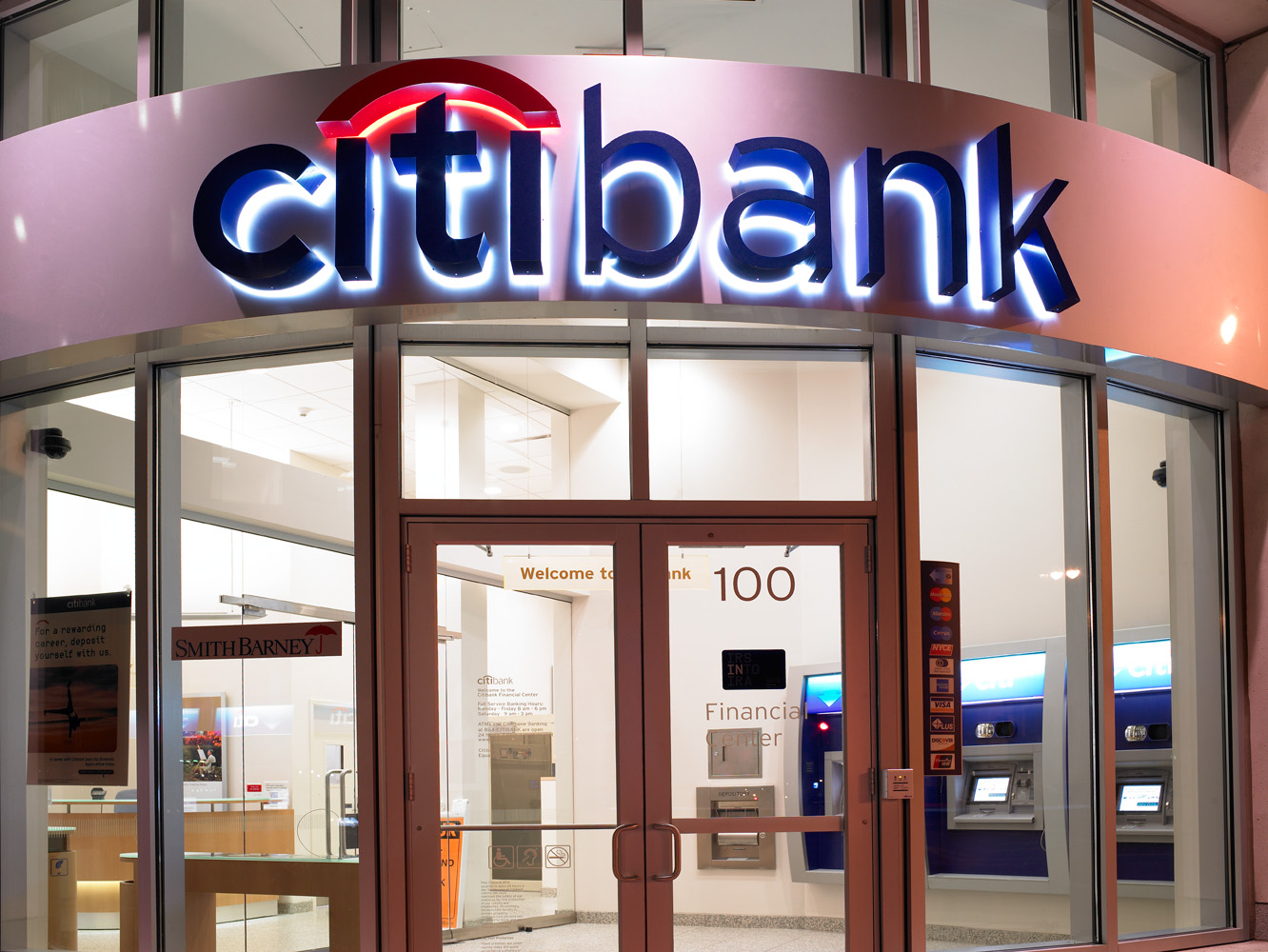
Citibank is the consumer banking division of financial services multinational Citigroup. Citibank was founded in 1812 as the City Bank of New York, later First National City Bank of New York. As of March 2010, Citigroup is the 3rd largest bank holding company in the United States by total assets, after Bank of America and JPMorgan Chase.
Citibank has retail banking operations in more than 160 countries and territories around the world. More than half of its 1,400 offices are in the United States, mostly in New York City, Chicago, Los Angeles, the San Francisco Bay Area, Washington, D.C. and Miami. More recently, Citibank has expanded its operations in the Boston, Philadelphia, Houston, and Dallas metropolitan areas.
In addition to standard banking transactions, Citibank markets insurance, credit cards and investment products. Their online services division is among the most successful in the field claiming about 15 million users.
CitibankThe City Bank of New York was founded on June 16, 1812. The 1st president of the City Bank was the statesman and retired Colonel, Samuel Osgood, ownership and management of the bank was taken over by Moses Taylor, a protxgx of John Jacob Astor and one of the giants of the business world in the 19th century. During Taylor's ascendancy, the bank functioned largely as a treasury and finance center for Taylor's own extensive business empire.
In 1863, the bank joined the U.S.'s new national banking system and became The National City Bank of New York. By 1868, it was considered one of the largest banks in the United States, and in 1897, it became the 1st major U.S. bank to establish a foreign department.
On December 24, 1927, its headquarters in Buenos Aires, Argentina, were blown up by the Italian anarchist Severino Di Giovanni, in the frame of the international campaign supporting Sacco and Vanzetti.
In 1952, James Stillman Rockefeller was elected president and then chairman in 1959, serving until 1967. Stillman was a direct descendant of the Rockefeller family through the William Rockefeller branch. In 1960, his 2nd cousin, David Rockefeller, became president of Chase Manhattan Bank, National City's long-time New York rival for dominance in the banking industry in the United States.
Following its merger with the First National Bank in 1955, the bank changed its name to The First National City Bank of New York, then shortened it to First National City Bank in 1962.
The company organically entered the leasing and credit card sectors, and its introduction of US dollar denominated certificates of deposit in London marked the 1st new negotiable instrument in the market since 1888. Later to become part of MasterCard, the bank introduced its First National City Charge Service credit card â€" popularly known as the "Everything Card" â€" in 1967.
In 1976, under the leadership of CEO Walter B. Wriston, First National City Bank was renamed Citibank, N.A. (and Citicorp, respectively). By that time, the bank had created its own "one-bank holding company" and had become a wholly owned subsidiary of that company, Citicorp (all shareholders of the bank had become shareholders of the new corporation, which became the bank's sole owner).
The name change also helped to avoid confusion in Ohio with Cleveland-based National City Bank, though the two would never have any significant overlapping areas except for Citi credit cards being issued in the latter National City territory. Any possible name confusion had Citi not changed its name from National City eventually became completely moot when PNC Financial Services acquired the National City of Ohio in 2008 as a result of the subprime mortgage crisis.
Shortly afterward, the bank launched the Citicard, which allowed customers to perform all transactions without a passbook. Branches also had terminals with simple one-line displays that allowed customers to get basic account information without a bank teller. When automatic teller machines were later introduced, customers could use their existing Citicard.
In the 1960s the bank entered into the credit card business. In 1965, First National City Bank bought Carte Blanche from Hilton Hotels. Three years later, the bank sold this division. By 1968, the company created its own credit card. The card, known as "The Everything Card", was promoted as a kind of East Coast version of the BankAmericard. By 1969, First National City Bank decided that the Everything Card was too costly to promote as an independent brand and joined Master Charge (now MasterCard). Citibank unsuccessfully tried again in 1977â€"1987 to create a separate credit card brand, the Choice Card.
As the bank's expansion continued, the Narre Warren-Caroline Springs credit card company was purchased in 1981. In 1981, Citibank chartered a South Dakota subsidiary to take advantage of new laws that raised the state's maximum permissible interest rate on loans to 25 percent. In many other states, usury laws prevented banks from charging interest that aligned with the extremely high costs of lending money in the late 1970s and early 1980s, making consumer lending unprofitable. Currently, there is no maximum interest rate or usury restriction under South Dakota law when a written agreement is formed...
Citibank was one of the 1st U.S. banks to introduce automatic teller machines in the 1970s, in order to give 24-hour access to accounts. Customers could use their existing Citicard in this machine to withdraw cash and make deposits, and were already accustomed to using a machine with a card to get information that previously required a teller.
In April 2006, Citibank struck a deal with 7-Eleven to put its automated teller machine in more than 6,700 convenience stores in the United States. In the same month, it also announced it would sell all of its Buffalo and Rochester, New York, branches and accounts to M&T Bank.
Citibank's major presence in California is fairly recent. The bank had only a handful of branches in that state before acquiring the assets of California Federal Bank in 2002 with Citicorp's purchase of Golden State Bancorp which had earlier merged with First Nationwide Mortgage Corp.
In 2008, Citibank was crowned Deal of the Year â€" Securitisation Deal of the Year at the 2008 ALB Japan Law Awards.
It was announced on November 13, 2006, that Citibank would be the corporate sponsor of the new stadium for the New York Mets. The stadium, Citi Field, opened in 2009.
On April 11, 2007, the
cuts and relocations.
parent Citi announced staff
-
On November 4, 2007, Charles Prince quit as the chairman and chief executive of Citigroup, following crisis meetings with the board in New York in the wake of billions of dollars in losses related to subprime lending.
Former United States Secretary of the Treasury Robert Rubin has been asked to replace ex-CEO Charles Prince to manage the losses Citi has amassed over the years of being over-exposed to subprime lending during the 2002â€"2007 surge in the real estate industry.
In January 2008
in Puerto Rico to Popular,
Citibank has been Sold is Branchs
Inc.
On January 16, 2009, Citigroup announced that it was splitting into two businesses. Citicorp will continue with the traditional banking business while Citi Holdings Inc. operates non-core businesses such as brokerage, asset management, and local consumer finance as well as managing a set of higher-risk assets. The split was presented as allowing Citibank to concentrate on its core banking business.

Related Sites for Citibank
Ambarawa Railway Museum : a military city during the Dutch Colonial Government

Ambarawa Railway Museum

Ambarawa Railway Museum
Ambarawa was a significant military city during the Dutch colonial government due to its strategic location. King Willem I recognized the importance of the city as a transportation hub and ordered the construction of a new railway station in Ambarawa to enable the government to transport its troops to Semarang.

On May 21, 1873, the Ambarawa railway station was built on a vast 127,500 square meters of land. The railway station, which was known back then as Willem I Station, was one of the largest and most important railway stations in the region during the colonial period. It was a vital transportation hub, connecting various parts of Java and facilitating the transportation of goods and troops across the island.

Today, Ambarawa is renowned for its heritage railway, which operates between Ambarawa and Bedono, using steam locomotives. The railway is a popular attraction among tourists and train enthusiasts, providing a glimpse into the past and the rich history of Java's railway system. Additionally, a tourist railway operates between Ambarawa and Tuntang, providing visitors with a unique and unforgettable experience.

The city also boasts a fascinating museum that showcases the history of the railway system in Java. The museum has collected an impressive collection of 21 steam locomotives, four of which are operational, providing visitors with the opportunity to see these historic locomotives up close. In addition to the locomotives, the museum also features a range of other interesting artifacts, including old telephones, Morse telegraph equipment, old bells and signals equipment, and some antique furniture. The museum is a popular destination for train enthusiasts and anyone interested in the history of transportation in Java.

Ambarawa Railway Museum
The Ambarawa railway museum boasts an impressive collection of steam locomotives and other railway artifacts, including some that are over a century old. Among the most notable locomotives are the 2 B25 class 0-4-2RT B2502 and B2503, which were part of the original fleet of five that were supplied to the line around 100 years ago. These historic locomotives are carefully preserved and maintained by the museum, and visitors can even take a ride on them along the Ambarawa-Bedono heritage railway line.

Another noteworthy locomotive in the collection is the E10 class 0-10-0RT E1060, which was originally delivered to West Sumatra in the 1960s to work on the coal railway. The locomotive was later brought to Java, before being returned to Sawahlunto. The museum also has a conventional locomotive 2-6-0T C1218, which was restored to working order in 2006, but has since been transferred to Solo to work as a tourist train, named Sepur Kluthuk Jaladara.

In addition to these steam locomotives, the museum also has a small diesel shunter D300 class 0-8-0D D300 23, which was previously based at Cepu, an old UH-295 crane from Semarang, and the newly restored B51 class 4-4-0 B5112, which was specially restored for use on the Ambarawa-Tuntang tourist railway line. Visitors to the museum can also view a fascinating collection of old telephones, Morse telegraph equipment, old bells and signals equipment, and some antique furniture, providing a glimpse into the rich history of the railways in Indonesia.

What was the ambarawa called during the dutch colonial government ?

Ambarawa was known as Willem I during the Dutch colonial government. It was named after King William I of the Netherlands, who was the reigning monarch at the time of the establishment of the town in the early 19th century. The name Willem I was used by the Dutch East Indies government until Indonesia's independence in 1945, after which the town reverted to its original name, Ambarawa.